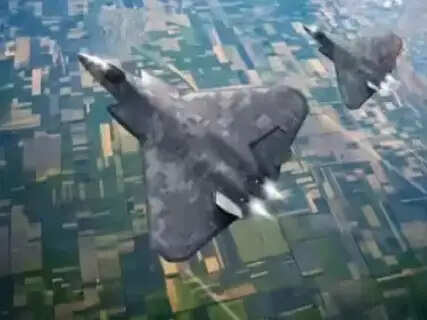
In a landmark move that promises to redefine the future of aerial combat, the Global Combat Air Programme (GCAP) has officially awarded a massive $6.1 billion contract to the international consortium 'Edgewing.' This significant investment is earmarked for the detailed engineering, design, and development of a next-generation sixth-generation fighter jet. Representing a strategic alliance between the United Kingdom, Japan, and Italy, the program is arguably the most ambitious combat aviation project globally. As geopolitical competition in advanced military technology intensifies, this funding serves as a definitive signal that the trilateral partnership is transitioning from the initial conceptual phase into full-scale industrial development, keeping the fleet on a firm trajectory to enter active service by 2035.The Power Behind the Program: Edgewing’s Industrial EdgeEdgewing stands at the heart of this technological revolution—a specialized joint venture pooling the aerospace expertise of Britain’s BAE Systems, Italy’s Leonardo, and the Japan Aircraft Industrial Enhancement Co. This latest $6.1 billion infusion follows a successful initial £686 million agreement finalized earlier in April 2026. Marco Joff, CEO of Edgewing, emphasized that the contract is a testament to the rapid progress achieved by the multinational team. By providing long-term financial stability, the deal not only accelerates the production timeline but also fortifies the defense industrial bases of all three partner nations, ensuring they remain at the cutting edge of global military aerospace capabilities.Beyond Fifth-Gen: Why the GCAP Jet is a Game-ChangerThe GCAP initiative is designed to integrate the strengths of Britain’s former 'Tempest' program and Japan’s 'FX' fighter project, creating a unified, high-performance combat aircraft intended to replace the Royal Air Force’s Eurofighter Typhoon and the Japan Air Self-Defense Force’s Mitsubishi F-2. Unlike the fifth-generation fighters that currently dominate the skies, the upcoming GCAP aircraft is being engineered as the centerpiece of a highly sophisticated, networked combat system. It will feature advanced stealth capabilities, artificial intelligence-driven mission management, and sensor fusion, all supported by an open-architecture design. This modular approach allows for rapid, future-proof upgrades to weaponry, sensors, and software. Furthermore, the jet is expected to operate in perfect harmony with autonomous "loyal wingman" drones, ensuring that the partner nations maintain air superiority in an increasingly digital and complex battlefield landscape.
Around the web