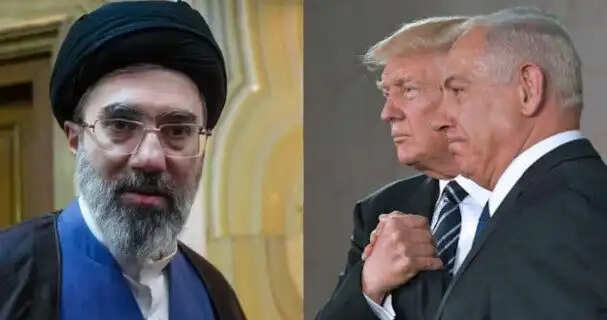
The fragile hope for peace in the Middle East has taken a massive hit. Just as mediators were hoping for a breakthrough, President Donald Trump has officially rejected a counter-proposal from Tehran, calling it "totally unacceptable." With the ceasefire now on the verge of collapse, the world is watching a dangerous game of nuclear brinkmanship that could ignite a second, even more violent phase of the war.The core of the disagreement? Enriched uranium. Despite weeks of fighting in what has become known as "Operation Epic Fury," the Iranian regime remains unwilling to surrender its nuclear leverage, while Trump and Israeli PM Benjamin Netanyahu have made it clear they will stop at nothing to neutralize it.The Stalled Peace Deal: What Iran WantedThrough Pakistani mediators, Iran submitted a list of demands that President Trump found "infuriating." The proposal highlighted a deep gap between the two sides:The Strait of Hormuz: Iran demanded full control over the vital shipping lane and the immediate lifting of the U.S. naval blockade.The Uranium Compromise: Iran offered to ship its stockpile of 60% enriched uranium to a third country—but only as a temporary measure, insisting on the right to reclaim it if the U.S. breaks the deal.The Timeline: While Washington demanded a 20-year halt to nuclear enrichment, Tehran only agreed to five.Trump’s reaction was swift and characteristic: "I don't like it," he posted on Truth Social, signaling that the U.S. is prepared to move beyond diplomacy.A New Leadership in TehranOn the Iranian side, the conflict has already led to a historic shift. Following the assassination of Ali Khamenei early in the war, his son Mojtaba Khamenei has officially assumed the role of Supreme Leader.Reports suggest that Mojtaba is taking an even more militant stance. In recent secret meetings with IRGC commanders, he reportedly ordered an immediate surge in weapons production and warned that any attempt by U.S. or Israeli forces to seize nuclear material would be met with “surprising options.”The "Uranium Seizure" PlanMilitary experts believe that if the U.S. decides to escalate, the goal won't just be airstrikes—it will be a high-risk ground operation. The mission would likely target the heavily fortified underground facilities at Natanz and Isfahan.The Difficulty: Extracting uranium isn't like seizing gold. It is stored as toxic gas in specialized cylinders.The Risks: A ground mission would require special commandos, heavy-lift helicopters, and a "Nuclear Search Team." Any mistake during extraction could lead to catastrophic radiation leaks or a major environmental disaster.Trump’s Final WarningThe rhetoric from the White House has reached a boiling point. Trump recently stated that U.S. and Israeli forces have already hit 70% of their targets but need two more weeks to finish the job. His message to Tehran was blunt: “If anyone other than us tries to extract uranium, we will blow them up.”As the April-May ceasefire reaches its breaking point, the diplomatic window is closing. With Iran on high alert and the U.S. Navy tightening its blockade, the next few days will determine if the Middle East moves toward a shaky peace or a full-scale regional catastrophe.
Around the web