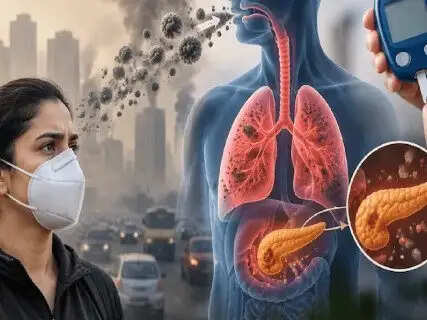
For decades, modern medicine has attributed the rising global wave of type 2 diabetes primarily to dietary habits, excessive sugar consumption, sedentary lifestyles, and genetic predispositions. Millions of individuals worldwide carefully monitor their carbohydrate intake, track daily steps, and maintain rigorous workout regimens in hopes of keeping metabolic disorders at bay. However, a groundbreaking global study has emerged with a startling conclusion that upends conventional medical wisdom: the air we breathe every single day may be quietly poisoning our metabolic health.According to comprehensive new research, chronic exposure to toxic ambient air pollution—specifically microscopic particulate matter—is a major independent risk factor for type 2 diabetes. This means that an individual could maintain a pristine diet, exercise rigorously, and avoid sugar entirely, yet still face an elevated risk of developing diabetes simply by living in an environment choked by polluted air.The APEX-T2D Study: Analyzing Data From Over Two Billion PeopleThe eye-opening research, titled the APEX-T2D study, was published in the prestigious Journal of Vascular Diseases just ahead of World Diabetes Day. To arrive at their conclusions, researchers conducted an unprecedented meta-analysis, reviewing 13 major public health evaluations spanning the globe.The scope of the investigation was massive, analyzing health data from over 2 billion participants across diverse geographical regions, including the United States, Europe, China, Japan, India, Bangladesh, Sri Lanka, Brazil, and Australia. The findings revealed a consistent, alarming correlation: long-term exposure to PM2.5 pollutants—tiny airborne particles measuring less than 2.5 micrometers in diameter—increases the risk of type 2 diabetes by 10 to 16 percent for every 10 micrograms per cubic meter ($µg/m^3$) increase in pollutant concentration.Why South Asia and India Face an Escalating CrisisWhile the health implications of particulate pollution are universal, the crisis hits developing nations in South Asia with disproportionate severity. The region is home to some of the highest ambient air pollution levels on Earth, colliding directly with an explosive domestic diabetes epidemic.India currently accounts for an estimated 100 million individuals living with diabetes, alongside an alarming 136 million pre-diabetic citizens whose bodies are already showing signs of impaired glucose regulation. In major urban centers like Delhi and northern metropolitan belts, the Air Quality Index (AQI) routinely skyrockets to hazardous zones of 400 to 500 during winter months. Breathing this toxic soup equates to chronic, daily cellular irritation, making clean air an urgent public health imperative rather than a luxury.The Biological Mechanism: How Polluted Air Elevates Blood SugarTo many laypeople, the connection between airborne smog and blood glucose levels seems obscure. However, toxicological and endocrinological investigations provide a clear physiological pathway explaining how particulate matter disrupts human metabolism:Direct Entry Into the Bloodstream: PM2.5 particles are microscopic—roughly 30 times thinner than a human hair. When inhaled, they bypass the upper respiratory defenses, penetrate deep into lung alveoli, and cross directly into the pulmonary capillary bloodstream.Systemic Inflammation and Oxidative Stress: Once circulating in the blood, these foreign particles trigger an immediate immune response, causing chronic systemic inflammation and severe oxidative stress throughout internal organs.Insulin Resistance: This persistent inflammatory state impairs the body's cellular receptors, diminishing their ability to respond effectively to insulin. Over time, the pancreas struggles to compensate, insulin resistance takes root, and blood sugar levels begin an unchecked upward climb.Rethinking Public Health and Environmental PolicyThe revelations of the APEX-T2D study demand a radical paradigm shift in how governments and individuals approach metabolic health. Combating diabetes can no longer be restricted to nutritional counseling and fitness initiatives alone; aggressive environmental regulations, emission controls, and aggressive transitions toward clean energy are now front-line medical interventions. Until systematic air purification becomes a reality, protecting metabolic health will require individuals in polluted regions to monitor AQI levels, utilize high-efficiency particulate air (HEPA) filters indoors, and advocate for systemic environmental reform.
