
Amit Shah to Sharpen UP Election Strategy; Tour Begins Next Month
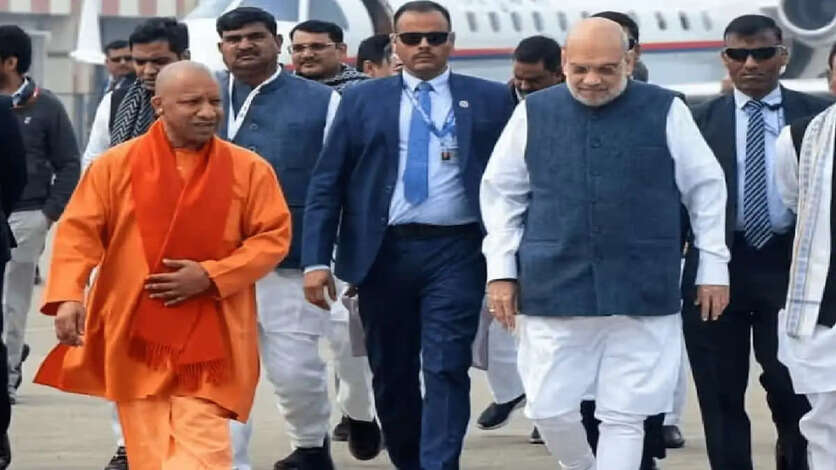
With the countdown to the 2027 Uttar Pradesh Assembly elections gathering pace, the Bharatiya Janata Party (BJP) is shifting its state machinery into high gear—and Union Home Minister Amit Shah is set to take direct command of sharpening the party's electoral roadmap. Following Prime Minister Narendra Modi's recent engagements highlighting development, employment, and youth outreach, Shah is expected to launch an intensive series of visits across Uttar Pradesh starting next month (December 2026), with indications pointing to Purvanchal as the starting point of his campaign tour. Across all 403 Assembly constituencies—spanning eastern Uttar Pradesh hubs such as Varanasi, Gorakhpur, and Prayagraj as well as central Awadh districts including Unnao, Kanpur, and Lucknow—the party is pairing top-level strategic reviews with village-level outreach to consolidate booth management, shore up weaker seats, and fine-tune caste and social equations ahead of polling.
Why Amit Shah's Tour Begins in Purvanchal and Targets Weak Seats
Party insiders indicate that Amit Shah's upcoming tour will go well beyond public rallies, functioning instead as a hands-on organizational audit. Having famously engineered the BJP's grassroots revival in Uttar Pradesh over a decade ago through meticulous booth-level mobilization, Shah is expected to hold closed-door review sessions with regional, district, and local office-bearers across the state's six organizational zones—Western UP, Braj, Kanpur-Bundelkhand, Awadh, Gorakhpur, and Kashi.
Starting in Purvanchal carries clear political weight. Eastern Uttar Pradesh accounts for a decisive bloc of Assembly seats and witnessed fierce opposition competition in recent electoral cycles. By beginning his ground reviews in eastern UP, Shah aims to energize cadre morale, bridge local organizational gaps, evaluate constituency-level feedback, and neutralize opposition strongholds early. Following Shah's visits, senior central leaders—including BJP National President Nitin Nabin—are also expected to step up their state tours.
40 Observers Deployed Across 403 Seats to Hold Village Chaupals
Running parallel to central leadership visits, the BJP has rolled out a structured statewide monitoring drive covering all 403 Assembly constituencies. Under this initiative, the party has appointed 40 senior observers—roughly one observer for every two districts—selected from leaders with deep organizational and election-management experience.
Their mandate is designed to give the leadership an unfiltered view of ground realities before candidate selection and campaign messaging are finalized:
-
Village-to-Village Chaupals: Observers are traveling through rural pockets and wards to hold direct community meetings (chaupals) with voters, farmers, women, and young people.
-
Scheme Outreach: They are highlighting flagship central and CM Yogi Adityanath-led state welfare initiatives, infrastructure projects, and law-and-order gains.
-
Candid Performance Feedback: Equally important, the observers are collecting ground-level assessments of local legislators, district units, and administrative delivery.
Based on the written reports compiled by these 40 observers, the state and central leadership will identify lagging booths, address local grievances, and calibrate constituency-specific strategies.
Organization Ministers From Other States Assigned to Six UP Regions
To reinforce state unit efforts led by State General Secretary (Organization) Dharampal Singh and state leadership, the BJP has also drafted experienced organization ministers (sangathan mantris) from other states across its six organizational regions in Uttar Pradesh. Working closely with regional presidents and district teams, these visiting strategists are concentrating on constituencies where booth committees, panna pramukhs, or social outreach require additional reinforcement.
With the Election Commission's Special Summary Revision of electoral rolls also underway ahead of final voter list publication in early January 2027, BJP planners are treating the coming weeks as decisive. Anchoring its campaign around organization, development, law and order, and nationalism, the party hopes that combining Amit Shah's micro-level strategic oversight with continuous village-level engagement will build durable momentum for Mission 2027 across Uttar Pradesh.