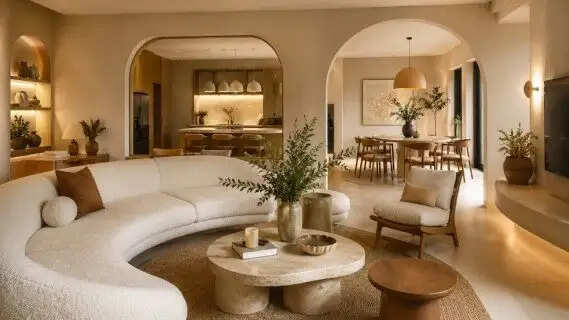
Home design in 2026 has officially moved beyond superficial aesthetics, focusing on spaces that deliver emotional comfort and deep personal connection. Rather than succumbing to rigid, passing trends, modern homeowners are actively embracing interior environments that encourage relaxation, elevate daily well-being, and reflect a slower, more mindful lifestyle.At the absolute epicentre of this cultural shift is the Soft Geometry and Fluid Forms design movement. This approach combines structured architectural integrity with a soft, organic feel, creating premium spaces that are elegant and inviting.From Sharp Minimalism to Soft SerenityThe days of razor-sharp corners and cold, stark minimalism are officially behind us. The evolving design philosophy for modern interiors trades stark white spaces and clinical straight lines for a warmer, welcoming style.Instead of rigid layouts, contemporary properties feature beautifully arched doorways, wave-inspired accent walls, and softer architectural details. This refined approach maintains the purity of simplicity while injecting the essential comfort, warmth, and personality that make a house feel genuinely lived-in rather than stiffly curated.Curves That Transform Everyday LivingThe definitive hallmark of current interior spaces is the deliberate integration of soft, flowing shapes. The strategic placement of crescent-shaped sofas, oval dining tables, sculptural coffee tables, rounded kitchen islands, and dome-shaped light fixtures creates a fluid environment that naturally encourages organic movement and open conversation.According to Mrudala Indur, Founder and Principal Designer at Diksuchi Design Studio, these fluid forms organically maximize the perception of spatial openness while fostering a deep, unbroken sense of harmony throughout the layout.The Psychology Behind Fluid ArchitectureCurved interiors offer significant psychological benefits that extend far beyond simple visual appeal. Environmental psychology research indicates that human beings naturally perceive rounded forms as inherently safer, gentler, and more calming than sharp, aggressive edges.By using gentle, continuous curves, designers reduce visual stress, lower subconscious anxiety, and create a home that supports focus, creativity, and emotional well-being.Tactile Luxury: Texture and Earthy Palettes Take Centre StageIn this new design paradigm, raw texture has emerged as the definitive new luxury. Spaces achieve multi-dimensional depth through the authentic application of organic materials, including:Walls & Finishes: Textural limewash walls, natural raw stone, and brushed brass fixtures.Furniture & Accents: Warm oak wood, breezy linen upholstery, tactile rattan details, and artisanal, handcrafted ceramics.To complement these rich textures, the 2026 colour palette remains intentionally understated and grounded. Soothing tones of warm beige, rich clay, buttery white, muted sage, dusty mineral blue, and earthy terracotta have completely replaced heavy, stark colour contrasts. These natural shades embrace the changing natural light throughout the day, letting the organic architecture become the true focal point.Invisible Innovation: Smart Tech with a Softer PresenceAs homes transition into restorative sanctuaries, technology is undergoing a major evolution to become increasingly invisible. Modern smart automation systems are now designed to blend seamlessly into custom furniture and architectural structures rather than dominate the room.From hidden, ambient speakers and integrated wireless charging stations to hyper-discreet home automation and smart circadian lighting, we focus on enhancing human comfort without disrupting the visual harmony of the beautifully soft space.