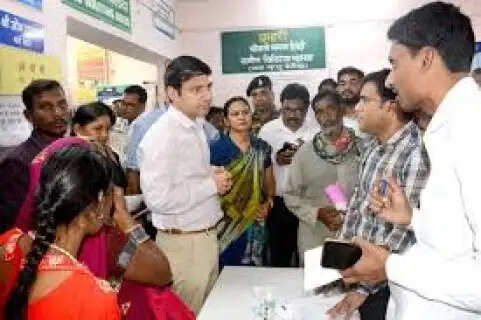
In a major move to transform healthcare accessibility, the Chhattisgarh government is set to upgrade the existing "Hamar Lab" system into the state-of-the-art Atal Arogya Lab. This high-tech initiative aims to bring advanced diagnostic services to the rural heartlands of the state, ensuring that patients no longer need to travel to distant district hospitals for critical tests.By integrating the latest digital infrastructure, the state is bridging the gap between primary health centers and specialized diagnostic hubs.Hub and Spoke Model: Testing Goes DigitalThe transformation centers around a sophisticated 'Hub and Spoke' model. Under this system, major district hospitals will act as centralized "hubs," while smaller community and primary health centers will serve as "spokes" or collection points.How it works for the patient:Local Collection: A patient visits their nearest health center to give a sample.Network Transfer: Samples are transported to the central Atal Arogya Lab hub.Instant Results: Once processed, reports are sent directly to the patient's registered mobile number, eliminating the need for a second trip to collect physical papers.Expanded Diagnostic Menu: From 120 to 134 TestsThe upgrade isn't just about speed; it's about scope. While the current Hamar Lab in Raipur offers approximately 120 types of tests, the new Atal Arogya Lab will expand this to 134 high-tech investigations. This includes advanced blood panels, hormonal assays, and specialized screenings that were previously only available in private labs or major urban centers.Strategic Partnership with HLL LifecareTo ensure international standards of accuracy and efficiency, the Chhattisgarh government has partnered with HLL Lifecare, a central government undertaking. This collaboration will bring over 1,000 government health institutions across the state under a single, unified digital platform, creating one of the most robust public diagnostic networks in India.The Impact on Rural ChhattisgarhThis initiative is a game-changer for the rural population. By decentralizing high-end diagnostics, the government is:Reducing Financial Burden: Eliminating travel and lodging costs for villagers.Early Detection: Enabling faster diagnosis of chronic diseases like diabetes, hypertension, and thyroid disorders.Efficiency: Reducing the overcrowding at district hospitals by distributing the diagnostic load.
Around the web