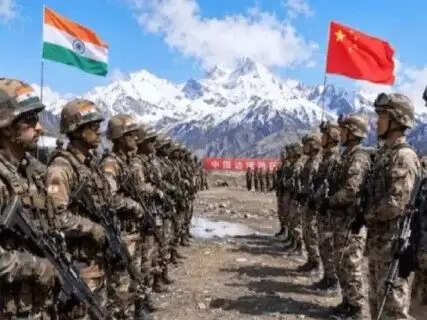
The complex geopolitical reality along the international boundary in Northeast India has once again taken center stage. Arunachal Pradesh Chief Minister Pema Khandu addressed media queries regarding the security situation along the Line of Actual Control (LAC), stating that boundary transgressions occur from both sides due to differing perceptions of the frontier.Speaking on the sidelines of National Press Day celebrations in Itanagar, Chief Minister Khandu reassured the public that the overall situation along the LAC remains entirely normal, with the Indian Armed Forces maintaining vigilant control and effectively safeguarding national sovereignty.Understanding the Historical Context of the McMahon LineArunachal Pradesh shares an expansive, rugged frontier stretching approximately 1,200 kilometers with Tibet, which is under Chinese control. Addressing decades-old territorial complexities, Khandu explained that many friction points stem from historical ambiguities, specifically concerning the McMahon Line.The McMahon Line was drawn during the historic 1914 Simla Convention, which involved representatives of British India, Tibet, and China. While British India and Tibetan representatives accepted the boundary, Beijing never signed the final agreement. Because certain stretches of this high-altitude border lack mutually recognized and explicit demarcation on the ground, both Indian and Chinese patrolling parties occasionally cross un-demarcated stretches into territories claimed by the other side."China doesn't consider the McMahon Line in Arunachal... our soldiers go that side, their patrolling parties also come this side sometimes," Khandu remarked, emphasizing that such operational overlaps must be understood within their proper geographical and historical context.Addressing Reports of Incursions in Upper SubansiriThe Chief Minister's remarks came in response to recent local queries regarding media reports and allegations from regional organizations—such as the Nah Welfare Society—concerning alleged Chinese activities and troop movements in the remote Taksing circle of the Upper Subansiri district.Rejecting exaggerated claims of permanent territorial loss or deep incursions, security authorities and military spokespersons have repeatedly clarified that reports of unauthorized camps or large-scale encroachments deep inside Indian territory are baseless. Indian military forces maintain a robust and dominant tactical presence across all sensitive sectors to deter unauthorized movements and prevent local friction from escalating.Prioritizing Peace and Frontier InfrastructureEmphasizing the state's primary strategic objectives, Khandu noted that the overarching priority for security management is preventing localized tactical misunderstandings from escalating into broader standoffs, thereby preserving absolute peace along the border.To achieve long-term security stability, the government continues to fast-track massive infrastructure development across frontier regions. Khandu highlighted that upgrading road connectivity, expanding communication networks, and boosting basic amenities in remote border settlements are vital steps. Crucially, he praised the resilient local communities residing in frontier villages, noting that their continued presence serves as a primary pillar in strengthening India’s strategic posture along the eastern Himalayan border.
Around the web
