
Dancing Camel 'Badal' Worth ₹7 Lakh Steals the Show at Pushkar Fair
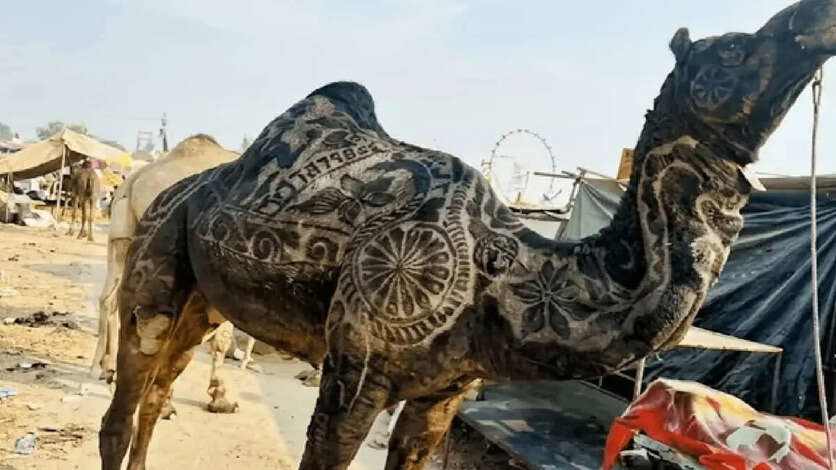
Amid the vibrant colors, folk music, and desert pageantry of Rajasthan's world-famous Pushkar Animal Fair in Ajmer, one four-legged performer has captured the imagination of domestic tourists, international photographers, and social media audiences alike: 'Badal,' a towering, intricately groomed dancing camel from Sikar district. Valued in viral fairground chatter at roughly ₹7 lakh (₹700,000)—though his breeder Vikas Pachhar emphasizes he is raised like family rather than put up for sale—Badal turned heads throughout the fairgrounds with breathtaking Rajasthani folk motifs sculpted directly into his coat, including delicate foliage, dancing peacocks, graceful swans, a turbaned Rajasthani man, and a village woman balancing a water pot. Preparing that living canvas requires an extraordinary 72 hours of precision hand-clipping and shaving by specialized artisans summoned from Haryana, costing around ₹20,000 for a single session plus daily touch-ups during the fair. Even as the 2026 Pushkar Fair formally concluded on Tuesday, November 24, 2026, with the auspicious Kartik Purnima Mahasnan (holy bath) and prize distribution ceremony at the fairgrounds, clips of Badal's footwork and fur artistry continue to trend nationwide. For travelers, livestock enthusiasts, and cultural readers across northern India—including families and tourism followers in Lucknow and neighboring Uttar Pradesh cities such as Unnao, Kanpur, Prayagraj, and Varanasi, where Rajasthan's winter heritage fairs and folk traditions draw thousands of visitors every November—Badal's story showcases the living craft and devotion behind India's pastoral heritage.
72-Hour Fur Sculpting From Haryana and a Royal Diet in Sikar
According to breeder Vikas Pachhar, grooming a champion show camel begins nearly a week before the fair gates open and relies on traditional Rajasthani ustra (razor) and scissor artistry passed down among specialist clippers from neighboring Haryana, alongside a nutrient-rich diet designed to keep Badal's hide glossy and resilient:
| Care & Preparation Pillar | Details Behind 'Badal' the Champion Camel |
| 72-Hour Fur Carving & Grooming | Master artisans from Haryana spend 72 hours sculpting peacocks, swans, leaves, a turbaned man, and a pot-bearing woman into Badal's coat at a cost of ₹20,000, followed by regular touch-ups in Pushkar. |
| Monthly Royal Nutrition | Fed high-grade guar (procured at roughly ₹8,500 per quintal), supplemented with sesame seeds (til), pure mustard oil, and desi ghee to maintain stamina, muscle tone, and a healthy coat sheen. |
| Early Dance Conditioning | Training begins around two years of age—the trickiest phase, when young camels frequently kick or jerk their necks, requiring patient, injury-free guidance from experienced handlers. |
| Signature Dance & Music Playlist | Performs synchronized Bhangra and traditional Teetri steps, responding enthusiastically to Rajasthani folk hits such as "Tejal Super Duper" and "Mhaaro Tejaji Rakhwalo." |
From Jaisalmer, Bikaner, and Nagaur Triumphs to Pushkar's Closing Mahasnan
Before arriving in Ajmer, Badal had already earned acclaim across Rajasthan's premier desert circuits in Jaisalmer, Bikaner, and Nagaur, and his rhythmic footwork once again made him a standout contender in Pushkar's traditional camel-dance arena. While local content creators and fairgoers pegged his market worth around ₹7 lakh—a figure that varies widely across breeds and builds at Pushkar—Pachhar maintains that the bond shared with Badal is priceless.
Meanwhile, administrative proceedings of the Pushkar Fair 2026 drew to a ceremonial close on Tuesday, November 24, following the Kartik Purnima Mahasnan at Pushkar Sarovar and an awards ceremony honoring winners across livestock, decoration, and cultural competitions—leaving Badal's royal makeover and dance reels as one of the defining memories of this year's desert gathering.