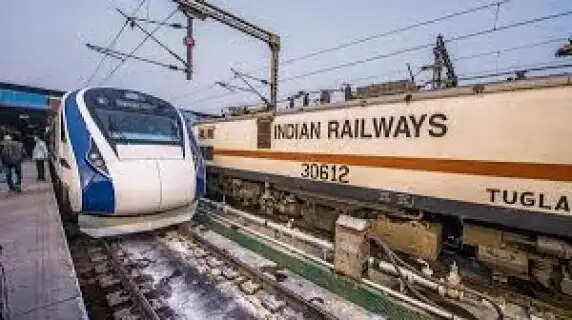
Traveling between Ambala and Jalandhar is about to get a whole lot smoother. In a major move to upgrade the state’s transportation network, the Ministry of Railways has officially sanctioned the long-awaited Rajpura Bypass Line. This project isn't just about laying new tracks; it’s a strategic solution to one of Northern Railway's biggest bottlenecks.Announced by Union Minister of State for Railways Ravneet Singh Bittu, the project comes with a total outlay of ₹411.96 crore and aims to significantly improve both passenger and freight movement across the region.What Exactly is the Rajpura Bypass?The 13.46-km long bypass is designed to solve a persistent problem: the saturation of the Rajpura Yard. Currently, the heavy traffic on the Ambala–Jalandhar corridor often leads to congestion and delays at Rajpura.The new line will directly link the New Shambhu Dedicated Freight Corridor (DFC) to the Kauli station. By bypassing the crowded Rajpura Yard altogether, trains—especially freight carriers—can maintain higher speeds and avoid getting stuck in transit.Why This Matters for YouFaster Travel: By decongesting the main corridor, passenger trains will face fewer "wait signals," leading to more punctual arrivals and departures for travelers moving toward Jalandhar, Amritsar, and Jammu.Economic Growth: Faster freight movement means goods can reach markets more quickly and at a lower cost, providing a direct boost to Punjab’s industrial and agricultural sectors.Future-Proofing: This project strengthens the capacity of the Northern Railway, allowing for more trains to be added to the schedule in the coming years without overloading the existing system.Part of a Larger VisionThis announcement follows a series of major rail investments in the state. From the recently approved Ferozepur–Patti link (which will cut the distance to Amritsar by nearly 100 km) to the development of 30 Amrit Bharat stations in cities like Bathinda, Abohar, and Jalandhar, the focus is clearly on modernizing Punjab’s rail infrastructure.As construction begins on the Rajpura Bypass, the goal is clear: to build a rail network that matches the speed and ambition of modern Punjab. For the millions of daily commuters and businesses that rely on these tracks, this project is a long-overdue victory.
Around the web