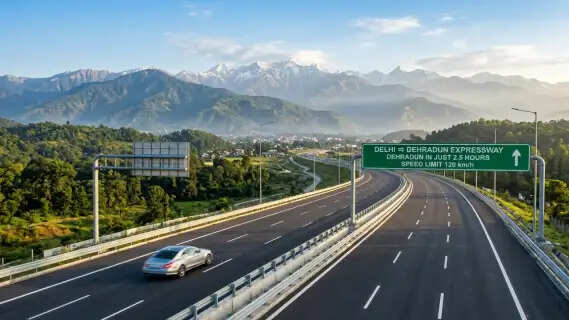
The commute between the national capital and the foothills of the Himalayas is set for a historic transformation. The Delhi-Dehradun Expressway, a flagship infrastructure project, is reaching its final stages, promising to reduce the travel time between Delhi and Dehradun from the current six hours to just two hours. This high-speed corridor is not just a road but a technological marvel designed to redefine connectivity across Delhi, Uttar Pradesh, and Uttarakhand.A 210-km Engineering Marvel with Wildlife ProtectionSpanning approximately 210 kilometers, the expressway features several world-class engineering segments. The most talked-about feature is the 12-kilometer-long elevated wildlife corridor passing through the Rajaji National Park. This is Asia’s largest wildlife elevated corridor, designed specifically to allow the free movement of elephants and other wild animals underneath, ensuring that high-speed traffic does not interfere with the local ecosystem. This "Green Highway" approach sets a new global benchmark for sustainable infrastructure.Connectivity Boost for UP and Uttarakhand CitiesThe expressway is strategically divided into four phases, providing seamless connectivity to multiple key cities. It starts from Akshardham in Delhi and passes through Baghpat, Baraut, Shamli, and Saharanpur in Uttar Pradesh before entering Uttarakhand. This route will significantly boost the local economies of these regions by facilitating faster transport of goods and services. For tourists heading to Mussoorie, Rishikesh, or Haridwar, the expressway offers a bypass to congested traditional routes, making weekend getaways from the NCR region incredibly convenient.Advanced Features: 120 KMPH Speed and Way-Side AmenitiesDesigned for a top speed of 120 kmph, the expressway includes advanced traffic management systems and closed tolling. To ensure a comfortable journey, the government is developing multiple way-side amenities, including trauma centers, food courts, and fuel stations every 25-30 kilometers. The reduction in travel time is expected to decrease fuel consumption and carbon emissions significantly, making it a win-win for both commuters and the environment. With the final stretches being paved, the dream of reaching the hills in the time it takes to watch a movie is finally becoming a reality.
Around the web