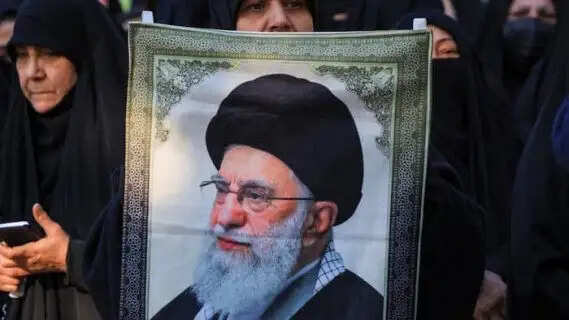
The geopolitical landscape of West Asia faces a monumental moment as the coffin carrying the body of Iran’s late Supreme Leader, Ayatollah Ali Khamenei, arrived in Tehran. This marks the beginning of extensive final rites for the ruler who shaped the Islamic Republic for over three decades. According to the Islamic Republic of Iran Broadcasting (IRIB), the body was brought to the exact site in the capital where the leader was killed during the joint US-Israeli airstrikes on February 28. The multi-day public farewell is anticipated to draw a record-breaking crowd of 12 to 20 million participants, signalling one of the largest public gatherings in modern history.Massive Logistical Corridor Prepares for Record-Breaking Public OutpouringTo manage the unprecedented influx of mourners, the Islamic Revolutionary Guard Corps (IRGC) and municipal planners have devised a decentralised procession network. Brigadier General Hassan Hassanzadeh, commander of the IRGC’s Tehran Command, announced that technical assessments concluded no single street in Tehran could safely accommodate the anticipated crowds. Consequently, the procession will move along a broad corridor across the capital with strict vehicle restrictions.The primary farewell events will take place at Tehran’s Imam Khomeini Grand Prayer Grounds. The venue will open its gates to the public at 6:00 AM on July 4, with services continuing until 8:00 PM, followed by official funeral prayers on the morning of July 5. The late leader’s body will lie in state on an elevated platform to ensure visibility across the vast grounds. The city has fully mobilised its metro and bus fleets, established traffic-control zones at all city entrances, and set up five major service hubs that provide medical aid, food, and water to attendees.High-Stakes Absence: New Supreme Leader Mojtaba Khamenei Avoids Public RitesIn a striking development highlighting the severe security challenges surrounding the transition, the newly appointed Supreme Leader, Mojtaba Khamenei, will not physically attend his father’s funeral ceremonies. Ayatollah Hakim Elahi, the Supreme Leader’s representative in India, confirmed that the decision was dictated by direct Israeli threats and high-risk surveillance operations, making a public appearance exceedingly dangerous.Since succeeding his father following the February strikes, Mojtaba Khamenei has maintained a strict low profile, operating primarily through written statements. His absence from both his father’s upcoming state funeral and the recent funeral of his wife, Zahra Haddad-Adel, underscores the intense security protocols governing the new administration as the regional conflict persists.Global Diplomacy and India’s High-Level DelegationThe state funeral has drawn significant international attention and diplomatic movements. UN Secretary-General António Guterres held an official telephone call with Iranian Foreign Minister Abbas Araghchi to extend formal condolences and discuss critical regional developments, including the status of the Strait of Hormuz and ongoing negotiations. Tributes have poured in from various global embassies, including Iran's mission in Ghana, which highlighted the late leader's historic advocacy for independent post-colonial African alliances.India is sending a high-level diplomatic delegation to represent the nation at the official ceremonies on Friday. The Ministry of External Affairs (MEA) announced that Bihar Governor Lt. Gen. (Rtd.) Syed Ata Hasnain, alongside the Minister of State (MoS) for External Affairs, Pabitra Margherita, will land in Tehran to attend the formal proceedings, reinforcing diplomatic ties during this period of transition.
Around the web