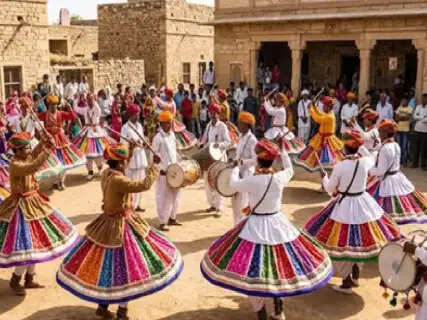
When it comes to rich cultural heritage, vibrant traditions, and spellbinding folk arts, Rajasthan stands unrivaled on the global map. The desert state boasts unique folk songs and energetic dances tailored for every festive occasion, with the iconic Gair dance holding a special place of pride. Deeply rooted in the cultural history of the Mewar, Marwar, and Barmer regions, this mesmerizing folk performance captivates audiences with its rhythmic grace, historical significance, and a unique convention: it is performed exclusively by men, moving in synchronization within a dynamic circle.Origins and History: From Bhil Tribal Martial Arts to Festive CelebrationThe linguistic roots of the term "Gair" stem from the word "gher," which translates to a circle, perfectly describing the formation in which dancers move. Historically, the Gair dance originated among the martial Bhil tribe of Mewar and Barmer, communities renowned for their warrior traditions and communal festivals. In ancient times, Bhil warriors practiced martial maneuvers, moving in protective circles while training with sticks and swords. Over generations, these combat exercises evolved into a joyous celebration of community and defense, eventually blossoming into a treasured folk dance. Another historical narrative suggests that while women in Marwar performed the traditional Luur dance during Holi, men would stand guard in a protective circle, eventually integrating rhythmic steps that gave birth to the modern Gair dance. In time, other communities, including Rajputs and Jangids, embraced the art form, making it a statewide symbol of Rajasthani pride.Timing and Cultural Significance of the PerformanceThe energetic Gair dance season officially commences the day after Holi during the auspicious month of Phalgun and continues for nearly 15 days. Serving both as a source of high-spirited entertainment and a powerful symbol of community unity, men from various backgrounds gather to celebrate collective harmony. Dancers move in rhythmic unison to the thunderous beats of the traditional dholak and the spirited tunes of the Bankiya wind instrument, creating an electrifying atmosphere that resonates across village squares and festival grounds.Distinctive Costumes and Performance AttireThe visual appeal of the Gair dance is heavily amplified by its striking and colorful traditional attire. Male performers traditionally don vibrant red and white costumes that create stunning visual waves as they spin and step in circles. The outfit features a long, flared angrakha (tunic) worn over a white dhoti or churidar pyjama, complemented by a bright red, saffron, or pink Rajasthani turban crowning the head. Dancers frequently hold wooden sticks or Khandas, striking them together in rhythmic harmony to match the tempo, while traditional anklets tied to their feet jingle melodiously to every beat of the dholak.
Around the web