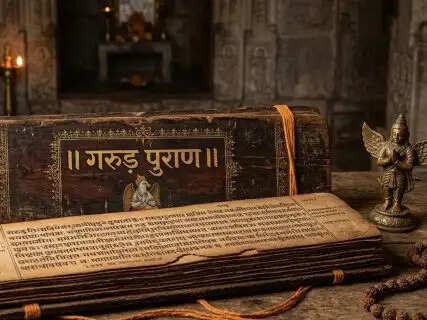
In Hindu philosophy and ancient Vedic literature, life after death holds deep spiritual significance. Among the various sacred texts, the Garud Puran stands as an authoritative guide detailing the journey of the soul post-death and outlining the duties of the living family members. Often out of pure affection or emotional attachment, family members tend to keep or wear the clothes, watches, jewelry, and other personal belongings of a deceased loved one. However, according to ancient scriptures, doing so can inadvertently invite serious spiritual complications into the lives of the living.The scripture explains that even after the physical body ceases to exist, the soul's attachment to its worldly possessions and earthly family does not vanish immediately. Constantly using these personal artifacts can create a spiritual tether, pulling the departed soul back toward its materialistic desires, which can disrupt the household’s peace.The Hidden Danger of Wearing a Departed Soul's ClothesThe Garud Puran explicitly advises against using the wardrobe of a deceased person. It is believed that clothing, being in constant physical contact with an individual, absorbs their personal energy fields, thoughts, and bodily vibrations over time. Even after rituals are performed, a residual blueprint of the deceased person’s energy remains deeply embedded in their attire.When a living family member wears these garments, it reactivates the departed soul's attachment to the physical world. Instead of progressing on its cosmic journey toward liberation, the soul feels drawn back to its old possessions. For the living, this energetic overlap can manifest as sudden mental stress, unexplained anxiety, recurring nightmares, and a heavy atmosphere within the home. Therefore, scriptures strongly advocate donating these clothes to the needy or responsibly destroying them rather than passing them down.Why Wristwatches and Personal Items Retain Karmic EnergyBeyond clothing, timepieces like wristwatches carry severe warnings in ancient astrological and spiritual practices. A watch is not merely an accessory; it is directly linked to an individual’s personal time cycle, life energy, and destiny. The constant tick of a personal watch binds it tightly to the owner’s life span.When someone else wears that specific wristwatch, the residual energy of the deceased owner’s incomplete desires or unfulfilled karmic cycles can impact the new user. This spiritual interference can result in chronic misfortune, sudden blockages in career progression, and unexplainable hurdles in daily life. A similar rule applies to other intimate personal items such as spectacles, bedding, and footwear, all of which should ideally be given away in charity to severe any lingering earthly attachments.What to Do With Precious Gold Jewelry and Family HeirloomsWhen it comes to gold ornaments, silver jewelry, and precious gemstones, the rules outlined in the Garud Puran offer a practical yet deeply spiritual alternative. Unlike clothing or footwear, valuable metals are considered family assets and do not need to be thrown away or donated outside the family ecosystem. However, putting them on immediately after a relative’s passing is strictly forbidden.To safely inherit and wear family heirlooms, the scriptures mandate a comprehensive purification process. Before anyone puts on the jewelry of a deceased parent or ancestor, it must be thoroughly cleansed using sacred elements like Ganga water (Holy Ganges water) or Panchamrit. Alternatively, the most effective method is to melt the old gold down and recast it into entirely new designs. This process completely erases the energetic imprint of the previous owner, rendering the metal pure and free from any spiritual affliction, allowing the family to honor their legacy without attracting negative cosmic vibrations.
Around the web