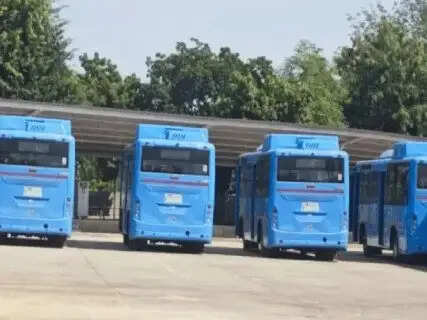
Public transportation across the Millennium City is undergoing a major technological and ecological upgrade. In a decisive move to curb urban air pollution, expand last-mile connectivity, and offer a comfortable, climate-controlled commute, the Gurugram Metropolitan City Bus Limited (GMCBL) has officially inducted 71 brand-new air-conditioned electric buses into its growing urban transport fleet. Passenger trials for the first batch of 35 electric buses kicked off this week, operating seamlessly across nine newly designed and expanded routes connecting key residential sectors, educational hubs, industrial zones, railway stations, and rapid metro corridors.The registration and compliance formalities for the remaining 36 electric vehicles are currently in the final stages, with full-scale deployment expected shortly. According to transit officials, this massive fleet expansion is poised to transform daily commuting not only within Gurugram’s core commercial sectors but also across distant suburban and rural linkages, including Pataudi, Hailey Mandi, and surrounding rural abadis.Fleet Operations Managed From Sector 10 Depot During Trial PhaseLed by GMCBL Chief Executive Officer Vishwajeet Chaudhary, the transport authority is utilizing the current trial phase to meticulously evaluate passenger footfall, boarding patterns, route punctuality, battery efficiency, and technical operational capacity. All participating electric buses are being dispatched directly from the Sector 10 bus depot, which serves as the central staging and maintenance hub for the city’s green fleet.Transport planners are actively collecting commuter feedback during this testing window to fine-tune schedules before regular commercial timetables are published. The induction of these zero-emission buses marks a cornerstone in Haryana’s broader strategy to modernize public transit networks, reduce carbon emissions, and alleviate traffic congestion across major arterial roads.Key Routes and Direct Connectivity: From Pataudi to Dwarka Sector-21The newly operational nine routes have been mapped to bridge critical connectivity gaps, linking densely populated residential clusters directly to transit hubs and metro stations. Notable routes now serviced by the AC electric fleet include:IMT Chowk to Dwarka Sector-21 Metro Station: Establishing vital interstate connectivity between Gurugram’s industrial manufacturing hub and the Delhi Metro network.Gurugram Bus Stand to Pataudi Railway Station (via Hailey Mandi): Providing reliable, affordable public transit for suburban commuters travelling between rural sub-divisions and the city center.Conscient Habitat (Sector 99A) to Guru Dronacharya Metro Station: Serving emerging residential sectors along the Dwarka Expressway corridor.Pace City-2 (Sector 37) to Millennium City Centre Metro Station: Facilitating swift office commutes for corporate professionals.Sector-99A to Kendriya Vihar & Bhondsi Police Chowki to Gaushala Ground (Mahavir Chowk): Strengthening intra-city orbital connectivity.Gurugram Railway Station to Dhana Mod: Enhancing feeder services to regional rail networks.Economical Fare Structure: Travel Across the City Starting at ₹15Despite offering modern amenities—including air-conditioning, low-floor accessibility, digital ticketing, and silent electric propulsion—GMCBL has maintained a highly affordable, distance-based fare slab designed to encourage daily commuters to ditch private cars and two-wheelers:Distance SlabStandard Passenger FareUp to 6 Kilometers₹156 to 13 Kilometers₹25Exceeding 13 Kilometers₹35Each compact, maneuverable electric bus is designed to comfortably accommodate up to 25 seated passengers, making them nimble enough to navigate dense urban pockets while replacing polluting diesel autos and private vehicles.Complementing Existing CNG Fleet to Combat Winter SmogThe arrival of the new electric buses significantly bolsters GMCBL’s existing backbone of 150 CNG-powered city buses, effectively expanding overall carrying capacity during peak commuting hours. Transport experts emphasize that integrating reliable electric mobility directly addresses twin urban challenges in northern India: chronic road congestion and severe winter air pollution. By establishing seamless last-mile connectivity from residential housing societies to metro and railway stations, Gurugram’s upgraded transit network aims to make sustainable public commuting the preferred choice for thousands of daily travelers.
Around the web
