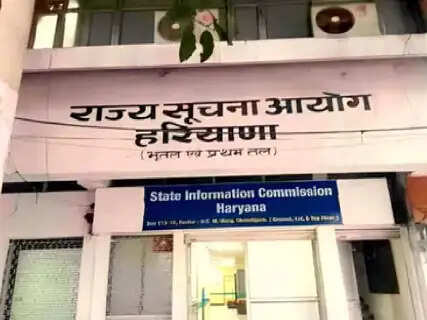
In a major administrative development that could cause serious ripples within the state police apparatus, the Haryana State Information Commission has recommended a comprehensive, high-level probe by the state's Crime Investigation Department or Vigilance Bureau into the educational credentials of a sitting Deputy Superintendent of Police. Addressing critical structural discrepancies raised through the transparency framework, the Commission formally directed the Additional Chief Secretary of the Home Department to independently verify the authenticity of the officer's academic records. While the regulatory body maintained strict institutional safeguards regarding privacy, it emphasized that unresolved integrity concerns surrounding top tier law enforcement officials run the direct risk of systematically eroding absolute public trust in regional governance.Balancing Privacy Laws And Public Interest: How The Commission Decoded The Strict RTI FrameworkThe crucial administrative directive stems from a second appeal filed by Hisar resident Umed Singh, who originally sought comprehensive access to the senior officer’s entire professional footprint—including Class 10th to graduation degree certificates, internal promotion files, personal bank account statements, leave records, income tax returns, and pending disciplinary records under the Right to Information Act. The departmental Public Information Officer had initially denied access by categorizing the dossiers as personal data protected under Section 8(1)(j) of the RTI Act. Reviewing the case, State Information Commissioner Dr. Ajay Kumar Sura upheld the nondisclosure of operational service records, explicitly citing the landmark Supreme Court precedent established in the Girish Ramchandra Deshpande v. Central Information Commission ruling, which protects an individual employee’s fundamental right to privacy against unnecessary public intrusion.Investigating Top Police Ranks: State Demands Urgent Timeline Bounds On Intelligence Verification ProtocolsHowever, the Commission drew a sharp line of distinction between merely releasing personal documents to a third party and completely ignoring serious allegations regarding potential identity or qualification fraud. The division bench noted that because a DSP occupies a highly sensitive administrative post responsible for maintaining law and order, any unchecked shadow over their basic eligibility directly compromises institutional authority. Consequently, utilizing the statutory powers granted under Section 25(5) of the RTI Act, the Commission recommended that competent state intelligence units perform an extensive factual verification of the certificates. The final order explicitly mandates that the specialized investigation must be finalized within a swift, legally bound timeframe, with the detailed outcome simultaneously communicated to the apex monitoring commission and the original appellant.
Around the web