
How Lord Parashurama Created Konkan, Goa & Kerala With His Axe
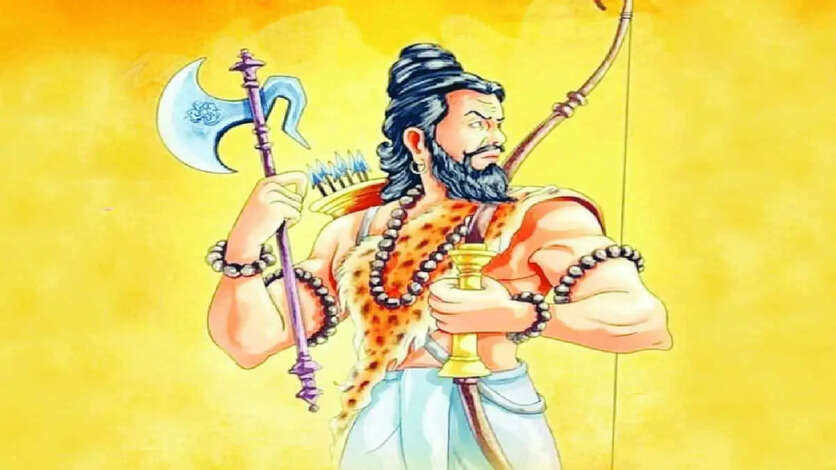
Among the ten incarnations (Dashavatara) of Lord Vishnu, Lord Parashurama—the sixth avatar and one of Hinduism's revered immortals (Chiranjeevis)—stands out across both the Ramayana and the Mahabharata for fierce valor, ascetic discipline, and unwavering fidelity to his word. Yet one of the most dramatic episodes in Puranic lore tells not of a battlefield conquest, but of a moment when Parashurama's own generosity left him without a single inch of earth to call home. According to traditional narratives preserved in Puranic texts and regional coastal heritage, after performing a grand Mahayagna, Lord Parashurama donated the entire conquered earth as dakshina to Sage Kashyapa—and when the sage reminded him that residing on gifted land would compromise the sanctity of the donation, Parashurama walked away without hesitation toward the Sahyadri Mountains (Western Ghats), ultimately compelling the ocean to recede by hurling his sacred axe (Parashu) into the waves to create the fertile coastal belt known as Parashurama Kshetra. For readers interested in Indian mythology, sacred geography, and cultural heritage across Uttar Pradesh—including households in Lucknow and neighboring historic centers such as Unnao, Kanpur, Prayagraj, and Varanasi, where epics, Puranic storytelling, and traditional temple lore remain deeply woven into everyday life—this legend illuminates how spiritual narratives connect northern epic traditions with India's southwestern coastline.
Why Donating the Earth to Sage Kashyapa Left Parashurama Without Shelter
Following his campaigns to restore dharma, Lord Parashurama organized a sacred Mahayagna and bestowed sovereignty over the entire earth upon Sage Kashyapa. Once the ritual transfer was complete, Sage Kashyapa pointed out that since the land now belonged to him, Parashurama could no longer remain on it—as living upon or enjoying the fruits of what one has formally given away diminishes the merit of daan (selfless charity). True to his vow, Parashurama neither argued nor reclaimed even a hamlet; instead, he stepped out immediately in search of unoccupied ground where he could perform penance without violating his gift.
From the Sahyadri Summit to Hurling the Sacred Axe Into the Ocean
Ascending the heights of the Sahyadri Mountains, Lord Parashurama gazed westward across the vast expanse of the Arabian Sea and appealed to Varuna, the god of the oceans, to grant him a modest strip of coastal land for meditation and dwelling. When surging waves met his plea without yielding space, Parashurama lifted the divine axe (Parashu) bestowed upon him by Lord Shiva and hurled it with immense force across the sea. As the legend recounts, the waters immediately rolled back up to the point where the axe struck, revealing a lush, emerald coastline blessed with rivers, coconut groves, and fertile soil suited for agriculture and human settlement.
Key Elements of the Parashurama Kshetra Legend Across India's West Coast
Across coastal communities in western and southwestern India, this reclaimed coastal stretch—often described in traditional lore as extending from Gokarna to Kanyakumari—is revered as Parashurama Kshetra:
| Sacred Narrative Element | Traditional Meaning & Regional Significance |
| The Act of Total Daan | Donating the entire earth to Sage Kashyapa after the Mahayagna exemplifies absolute detachment and adherence to one's spoken pledge. |
| The Sahyadri & Varuna Episode | Standing atop the Sahyadri range and appealing to Varuna reflects harmony with cosmic elements before invoking divine resolve. |
| The Hurl of Lord Shiva's Axe | Throwing the Parashu caused the Arabian Sea to retreat, transforming submerged seabed into fertile rivers, green plains, and coconut-lined shores. |
| Regions Linked to Parashurama Kshetra | Traditionally associated with the Konkan coast, Goa, coastal Karnataka (Tulu Nadu), and Kerala, where temples and local traditions honor Parashurama as creator and protector of the land. |
How Mythic Geography Continues to Inspire Cultural Heritage
Even today, temples dedicated to Lord Parashurama along the Konkan belt, Goa, and Kerala celebrate this legend as the origin story of their lush coastal landscape—preserving a timeless parable in which total generosity, steadfast integrity, and divine resolve quite literally carved new ground out of the sea.