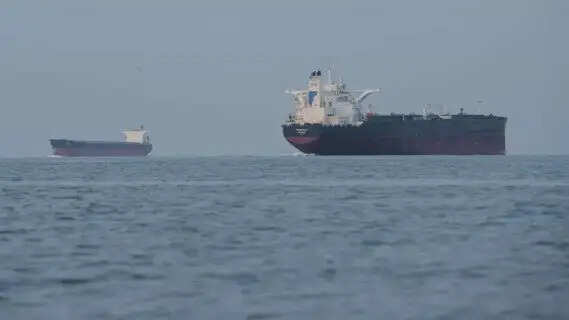
Amid a raging dispute in the Strait of Hormuz, India has taken a decisive step toward ensuring its energy security. A massive project to lay a 2,000 km undersea gas pipeline from Oman to Gujarat is being fast-tracked by the government, at a cost of some 40,000 crore. This could guarantee India a sustainable and cheaper gas supply that is entirely free from the problems of maritime trade routes. This would effectively reduce India's reliance on the LNG market, as well as shield it from an energy crisis in the country.According to petroleum ministry officials, final clearance would lead to completion of the project within 5-7 years. The government thinks this will help India become more self-sufficient, reducing reliance on the LNG spot market, as well as provide a stable and cheaper supply of gas. The proposed Middle East-India Deep-water Pipeline (MEIDP) would span 2,000 kilometers. The pipeline would link Oman to the western Indian coast in Gujarat, crossing under the Arabian Sea, carrying nearly 31 mmscmd of natural gas into India.Preparations have begun for the government to task its state-owned companies-GAIL, Engineers India, and Indian Oil Corporation-to carry out a detailed project report. The initial study, which is currently being conducted, is based on the preliminary work done by the private firm in New Delhi, The South Asia Gas Enterprise (SAGE).Avoids sea blockagesAccording to reports of an ET paper, the route of the pipeline has been so designed that it does not touch or run through areas that are in geopolitical conflict or maritime choke points. This would enable India to procure gas from all gas-rich sources such as Oman, UAE, Qatar, Saudi Arabia, Iran, Turkmenistan, etc., without any interruption of sea trade. Reports say the pipe could be laid at a depth of up to 3,450 m, making it one of the deepest undersea pipelines in the world if constructed. It has been proven technically feasible and safe by technical studies conducted.SAGE said in its report it had laid a 3,000 m long technical test pipeline to study the seabed conditions at an approximate cost of 250 million rupees. According to experts, this would not only enhance India's energy security but also its economic and strategic independence and would not get disrupted even if a global crisis or a disruption of sea trade routes like the Strait of Hormuz occurs.
Around the web