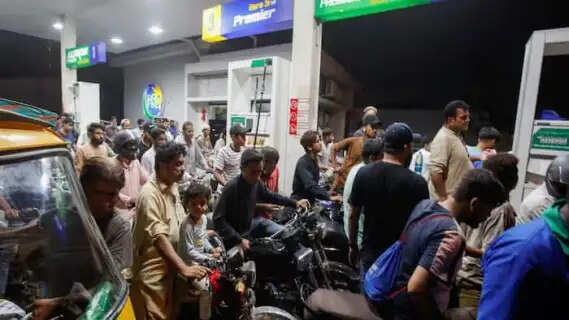
Exacerbating the ongoing economic challenges faced by citizens, the federal government of Pakistan has officially announced a massive increase in domestic petroleum prices. Effective from Saturday, July 11, 2026, the retail price of petrol has increased by 13.18 rupees per litre, and the retail price of High-Speed Diesel (HSD) by 13.80 rupees per litre.Prime Minister Shehbaz Sharif granted the final administrative approval for the revised tariffs following a formal summary submitted by the Petroleum Division and the Oil and Gas Regulatory Authority (OGRA).Gulf Conflict Drives Brent Crude Past 77 DollarsThe sudden upward revision is directly tied to a major rally in the international energy market. The complete collapse of the US-Iran maritime ceasefire and subsequent precision airstrikes hitting 90 military targets inside Iran have sparked severe geopolitical uncertainty across the Persian Gulf.With nearly 20% of the global petroleum supply facing logistical blockades in the Strait of Hormuz, global oil benchmarks have surged. International Brent crude climbed sharply to around $77 per barrel, while West Texas Intermediate (WTI) traded upwards at $73.60 per barrel. Given Pakistan’s heavy reliance on imported fuel, the Shehbaz Sharif administration had no choice but to pass the increased import costs directly onto consumers.New Highs for Petrol and Diesel Tariffs in PakistanFollowing the implementation of the new pricing directive, domestic fuel stations across major urban centres like Islamabad, Karachi, and Lahore have updated their meters to reflect record-breaking retail rates:Petrol (Motor Spirit): Fixed at a new rate of 310.71 rupees per litre, up from the previous baseline.High-Speed Diesel (HSD): Set at 323.30 rupees per litre, marking a significant increase for the commercial transport sector.Kerosene Oil: Maintained at its previous low-tier baseline of 227.05 rupees per litre, following an earlier 6.85 rupee reduction passed by the government to support low-income households.IMF Structural Mandates and Tax Burdens Fuel Public AngerThis latest fuel blow arrives on the heels of aggressive revenue-generation measures taken by the government to satisfy strict International Monetary Fund (IMF) bailout conditions. On June 28, the state proactively adjusted its internal tax framework, raising the petroleum levy on High-Speed Diesel by 6.57 rupees per litre to reach an absolute ceiling of 79.54 rupees per litre, while raising the petrol levy to 66.64 rupees per litre.Furthermore, effective July 1, the government doubled its specialised climate support levy to 5 rupees per litre. The cumulative tax components on a single litre of petrol—including direct customs duties, the climate levy, and the federal petroleum levy—now stack up to an unprecedented 95 rupees per litre.The provincial government of Sindh has officially challenged this structural taxation arrangement, arguing that the federal centre retains all petroleum levy collections for its own treasury, thereby bypassing the provincial distribution pool established under the General Sales Tax (GST) framework. As diesel fuels the vast majority of the country's heavy freight transport networks, agricultural pumps, and localised backup power grids, this latest hike will inevitably trigger a domino effect, driving up the costs of essential daily commodities and inflation.
Around the web