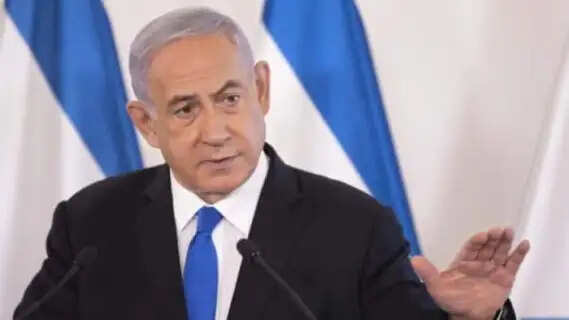
The spectre of an all-out regional war has returned to West Asia. Following a dramatic breakdown of the June maritime truce between the United States and Iran, Israel’s Defence Minister Israel Katz announced that the Israel Defence Forces (IDF) are prepared to resume their independent air campaign against Tehran at a moment's notice, promising to strike "with even greater force" if red lines are breached.Total Air Superiority: Israel Signals Direct Strike StrategySpeaking at a high-profile Israeli Air Force (IAF) pilots’ graduation ceremony at the Hatzerim Airbase, Defence Minister Katz made it clear that the temporary lull in direct state-on-state combat had not diluted Israel’s strategic calculations."The army is ready and on alert for a resumption of fighting, to regain air superiority and strike again… in Iran, to eliminate threats, including a third time if necessary," Katz stated, referring to the two previous waves of heavy aerial bombardments carried out by the IAF earlier in the conflict. "If we have to go back, we will go back, with even greater force," he added.Concurrently, newly appointed IDF Chief of Staff Lt. Gen. Eyal Zamir confirmed that comprehensive operational contingency plans have been drawn up at headquarters. Zamir warned the graduating cohort that the campaign against the Iranian axis is far from finished."On the drawing board are new plans," Lt. Gen. Zamir declared. "Major operations are still expected to lie ahead of us. Be prepared. Even at this moment, we are closely monitoring developments in Iran and Lebanon and remain on high alert for immediate action."Netanyahu Pledges 350 Billion Shekel Munitions OverhaulAddressing the same cohort, Prime Minister Benjamin Netanyahu reinforced the nation's absolute doctrine regarding regional nuclear proliferation. He argued that the initial pre-emptive strikes launched by the joint U.S.-Israeli coalition successfully prevented Tehran from finalising an active weaponisation cycle.Netanyahu laid out a clear, aggressive policy directive for the coming decade:The Nuclear Red Line: "Our policy is clear: with an agreement or without an agreement, Iran will not have nuclear weapons," Netanyahu emphasised, dismissing the sustainability of any Western diplomatic pacts with the Islamic Republic.Massive Defence Budget Boost: To sustain a prolonged, multi-front war of attrition, the Prime Minister announced an unprecedented allocation of 350 billion shekels (approximately $116 billion) to the national defence budget over the next ten years.Localised Munitions Sovereignty: A massive share of this capital injection will be funnelled directly into building a broad, domestic Israeli-made munitions industry. The strategic pivot is designed to reduce the country’s reliance on foreign supply chains and overseas ammunition shipments from allies.The Regional Powder Keg: Why the Ceasefire DissolvedThis collective escalation of rhetoric arrives as the broader Middle East slips back into active warfare. The fragile, U.S.-brokered June memorandum of understanding dissolved entirely after U.S. Central Command (CENTCOM) launched a massive wave of strikes against 90 military infrastructure targets inside Iran, retaliating for asymmetric drone strikes on commercial tankers in the Strait of Hormuz.With Iran responding by firing 10 ballistic missiles at a U.S. logistical base in Jordan, Jerusalem remains highly insulated but fully prepared to deploy its strategic bombers if the regional crossfire threatens its immediate borders.
Around the web