
Jharkhand Assembly Passes Resolution Seeking CEC Gyanesh Kumar's Removal
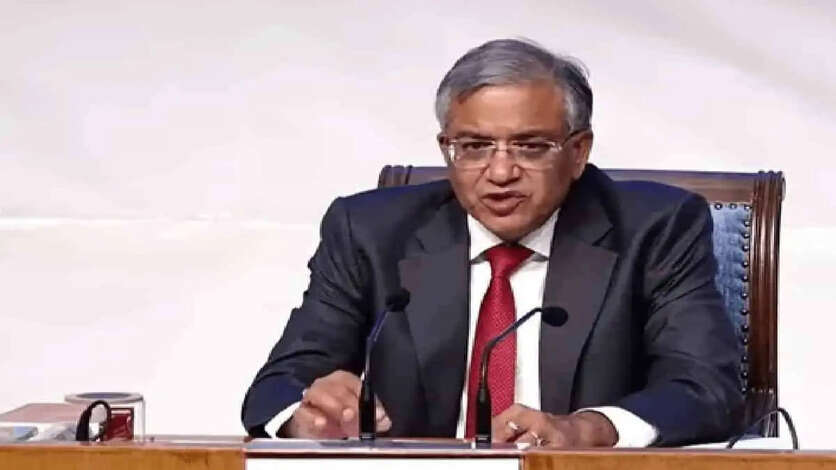
In a dramatic constitutional and political confrontation on the opening day of a special two-day session in Ranchi, the Jharkhand Legislative Assembly on Wednesday, November 25, 2026, passed a government resolution by voice vote calling for the immediate removal of Chief Election Commissioner (CEC) Gyanesh Kumar and demanding that the ongoing Special Intensive Revision (SIR) of electoral rolls be halted, extended, and redesigned with simplified rules. Moved by Parliamentary Affairs and Finance Minister Radhakrishna Kishore on behalf of the ruling coalition, the motion cleared the House after a marathon, fiery debate between treasury and opposition benches, with the Speaker declaring it adopted on the strength of the ruling alliance's majority while opposition MLAs remained seated inside the chamber until the end of proceedings. Invoking Article 326 of the Constitution of India—which guarantees universal adult suffrage to every eligible citizen—the Jharkhand government alleged that procedural rigidities in the current SIR exercise threaten to disenfranchise large numbers of genuine voters, particularly marginalized rural families and Particularly Vulnerable Tribal Groups (PVTGs) across the tribal-majority state. While Leader of the Opposition Babulal Marandi dismissed the special session as politically motivated, the state government announced that the adopted resolution will be formally transmitted to the Election Commission of India (ECI) and central constitutional authorities. For voters, legal observers, and political followers across northern and eastern India—including readers in Unnao and neighboring Uttar Pradesh cities such as Lucknow, Kanpur, Prayagraj, and Varanasi, where electoral-roll purification drives and constitutional debates around voting rights generate intense public engagement—Jharkhand's assembly resolution marks a major flashpoint in Centre–State and Election Commission relations.
Why the Jharkhand Government Cited West Bengal's SIR Experience and Demanded Fresh SOPs
Presenting the state government's stance on the floor of the House, Minister Radhakrishna Kishore emphasized that Jharkhand is not opposed in principle to revising or purifying electoral rolls, but is deeply alarmed by administrative chaos witnessed during the Special Intensive Revision in neighbouring West Bengal:
| Key Issue / Allegation in Resolution | Verified Figures & Arguments Placed Before Jharkhand Assembly (Nov 25, 2026) |
| Demand Regarding CEC & SIR Process | Called for the immediate removal of CEC Gyanesh Kumar, an immediate halt/deadline extension for the current SIR, and a fresh rollout only after inclusive consultations with all states and political parties to draft transparent rules and a simplified Standard Operating Procedure (SOP). |
| West Bengal SIR Precedent Cited | Resolution noted that in West Bengal, over 90 lakh voters' names were deleted and more than 38 lakh appeal applications were filed before tribunals, with the vast majority still unheard—warning against a repeat in Jharkhand. |
| Scale of Voters Affected in Jharkhand | Out of Jharkhand's 2.64 crore electors, only 2.21 crore appeared in the draft roll; the government claimed over 38% of total voters were either deleted or served "suspicious voter" notices (with 27% of the 2.21 crore draft electors receiving notices). |
| Nature of Discrepancies Flagged | More than 75% of notices stemmed from minor clerical issues such as spelling variations in parents' names, age mismatches, and logical errors rather than lack of citizenship. |
Constitutional Safeguards Under Article 326 and Challenges Facing PVTG Tribal Families
The resolution anchored its legal objection in Article 326 of the Constitution, asserting that no eligible Indian citizen should be stripped of their fundamental democratic right to vote because of overly technical documentation demands. Highlighting Jharkhand's unique socio-cultural landscape, the government stressed that PVTG communities and remote forest-dwelling households frequently lack legacy paper records and formal awareness.
During the heated debate, RJD MLA Suresh Paswan illustrated that ground reality vividly, pointing out that impoverished rural and tribal families in Jharkhand have traditionally stored vital household papers inside hollow bamboo tubes (baans ke chonge) inside mud homes—where termite (deemak) infestations routinely destroy documents. Alleging that vulnerable voters were being unfairly targeted, Paswan urged authorities to adopt humane verification standards so genuine citizens are never struck off the rolls.
Opposition Counter-Attack as Special Session Continues
Conversely, BJP leader Babulal Marandi pushed back sharply against the resolution, contending that the SIR drive is designed to remove ineligible entries and safeguard electoral integrity while accusing the ruling alliance of spreading confusion rather than assisting field-level verification. With the two-day special session set to take up the Mines and Minerals (Development and Regulation) Amendment Act next, Jharkhand's formal resolution challenging the Election Commission's SIR roadmap has set the stage for an escalating national debate over voter verification standards across India.