
Jitin Prasada Urges Closer India-Nepal Trade & Investment Ties
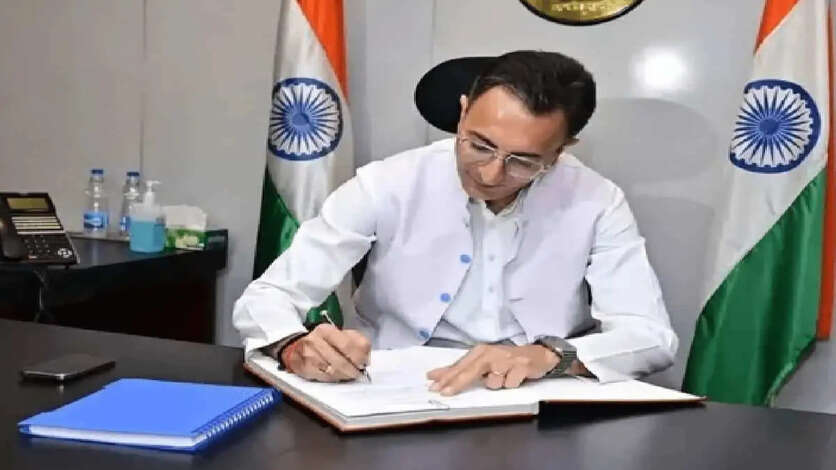
Union Minister of State for Commerce and Industry Jitin Prasada has urged India and Nepal to accelerate bilateral economic integration by shifting toward co-building and co-producing across high-growth sectors including manufacturing, infrastructure, clean energy, digital connectivity, and emerging technologies. Addressing business leaders and policymakers at the India–Nepal Business Meet in New Delhi on Monday, November 23, 2026—jointly organized by the Confederation of Indian Industry (CII) and the Federation of Nepalese Chambers of Commerce and Industry (FNCCI) on the sidelines of Nepal Prime Minister Balendra Shah's two-day state visit to India—Prasada emphasized that pairing India's large consumer market, industrial scale, and technological ecosystem with Nepal's natural resources, clean-energy potential, and young workforce can unlock a transformative phase of shared growth. For traders, manufacturers, logistics operators, and business communities across northern India—including commercial hubs in Lucknow and neighboring Uttar Pradesh cities such as Kanpur, Gorakhpur, Varanasi, Unnao, and Prayagraj, which serve as vital overland trade and transit gateways along the India–Nepal border—closer industrial and cross-border infrastructure cooperation carries direct regional economic impact.
Core Pillars of Bilateral Economic Cooperation Highlighted in New Delhi
Speaking alongside a visiting 52-member Nepali private-sector delegation accompanying Prime Minister Balendra Shah's official delegation, Jitin Prasada outlined why geographical proximity, cultural familiarity, and demographic energy give both countries a natural advantage in building resilient cross-border supply chains:
| Priority Sector / Theme | Strategic Focus Highlighted | Mutual Advantage for India & Nepal |
|---|---|---|
| Joint Manufacturing & Industrial Value Chains | Moving beyond basic merchandise trade toward co-production and joint ventures. | Combines India's industrial base and market scale with Nepal's competitive production opportunities. |
| Cross-Border Infrastructure & Transit | Upgrading roads, rail corridors, integrated check posts, and logistics links. | Cuts transit times and lowers freight costs for landlocked Nepal and northern Indian border states. |
| Clean Energy & Hydropower | Expanding bilateral power trade, grid connectivity, and renewable energy projects. | Leverages Nepal's abundant hydropower resources to support regional clean-energy demand. |
| Digital Connectivity & Emerging Technologies | Deepening fintech, digital public infrastructure, IT services, and startup collaboration. | Harnesses youth-driven innovation and cross-border digital payments across both economies. |
Prasada also pointed to growing investor confidence in Nepal's modernizing economy, noting that Indian businesses are closely watching new commercial avenues—from tourism and infrastructure to sports ecosystems following the recent Nepal Premier League.
What Nepali Industry Leaders Raised at the CII–FNCCI Roundtable
During the interactive business session, FNCCI President Anjan Shrestha and Nepali industrialists welcomed stronger Indian investment in Nepal's energy, infrastructure, manufacturing, and technology sectors, while urging coordinated public–private action to ease non-tariff trade barriers, testing/certification bottlenecks, and market-access hurdles faced by Nepali exporters entering the Indian market. Although India remains Nepal's largest trade, transit, and investment partner—with duty-free access granted to eligible Nepali goods—business representatives noted that smoother regulatory harmonization and faster border clearance would help narrow trade imbalances and spur two-way capital flows.
Strengthening Neighbourhood First Ties Through Practical Commerce
As Prime Minister Narendra Modi and Prime Minister Balendra Shah unveiled a broader forward-looking bilateral roadmap during the New Delhi summit, the CII–FNCCI dialogue reinforced that sustained commercial engagement—driven by private-sector partnerships, cleaner energy grids, and modernized border infrastructure—remains central to translating diplomatic goodwill into tangible jobs and growth across both nations.