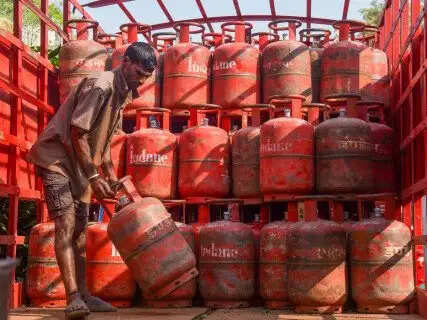
India, the world's third-largest consumer of liquefied petroleum gas (LPG), is grappling with a staggering energy challenge. According to recent data from global analytics firm Kpler, the country is facing a massive supply deficit of approximately 400,000 barrels of LPG per day. This deep shortfall is heavily squeezing the nation's energy supply chain, threatening domestic stability and sparking urgent conversations within policy circles. As geopolitical disruptions choke traditional trade lanes, the domestic energy architecture is under immense strain to keep up with the soaring demand of millions of households.The Strait of Hormuz Chokepoint: Why Imports Have Plunged by Over 50%The root cause of this massive energy squeeze trace directly back to the critical maritime corridors of West Asia. Following severe geopolitical escalations involving an attack on Iran, the strategically vital Strait of Hormuz has faced severe shipping restrictions and closures. This single waterway is the gateway for over 80% of India's total LPG imports, primarily sourced from major Middle Eastern suppliers including the UAE, Saudi Arabia, Qatar, and Kuwait. Consequently, India's seaborne LPG imports plummeted drastically from a robust 851,870 barrels per day in February to a meager 377,620 barrels per day in April, representing an unprecedented contraction in inbound fuel.Domestic Production Reaches Its Peak but Fails to Bridge the VoidIn response to the drying up of foreign imports, Indian oil refiners and state-run energy companies have aggressively scaled up domestic operations. Local LPG production successfully rallied, growing by 75,000 barrels per day to touch a near-maximum capacity of 530,000 barrels per day in April. However, top energy analysts warn that domestic supply has effectively peaked. Despite local facilities operating at full throttle, the absolute volume generated domestically remains mathematically inadequate to offset a massive import deficit of nearly half a million barrels, leaving a vulnerable gap in the nationwide daily consumption requirement.Government Cracks Down with 'One Household, One Connection' RuleTo mitigate the widening crisis, the central government has initiated strict demand-side management policies. Authorities have introduced the strict 'one household, one connection' policy, making it legally impermissible for a single household to simultaneously maintain both a Piped Natural Gas (PNG) grid subscription and a subsidized domestic LPG cylinder. Residents with access to PNG networks are being aggressively urged to surrender their traditional LPG cylinders within a strict three-month grace period. While more than half a million connections were transitioned to PNG in March alone, the shift remains a drop in the ocean, as PNG currently services just 16 million homes compared to the staggering 330 million households still entirely dependent on traditional LPG cylinders.Global Diversification Efforts Face Severe Logistical ObstaclesIn a frantic bid to stabilize the domestic stockpile, India has actively scrambled to diversify its international oil and gas procurement, tapping alternative sellers like Australia, Argentina, Chile, and the United States. While the US successfully dispatched around 149,000 barrels per day in April, and other non-Middle Eastern nations contributed another 43,000 barrels per day, these alternative supply routes introduce major financial and logistical friction. Shipping fuel from West Asian ports through the Persian Gulf traditionally takes a mere 5 to 6 days to reach Indian shores. In stark contrast, maritime cargo from Australia takes up to 20 days, while shipments journeying across the Atlantic from Argentina or the United States demand an exhausting 35 to 45 days, vastly inflating freight costs and stretching inventory cycles to their absolute limits.
Around the web