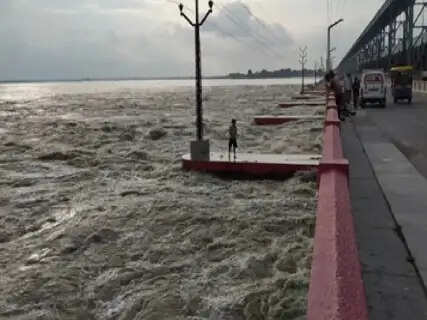
The disaster management framework and local administration in North Bihar have been placed on absolute high alert following a massive surge in the water levels of the volatile Kosi River. Unrelenting heavy downpours spanning the extensive transboundary catchment areas and the lower Terai region have triggered a rapid escalation in water inflows. Responding swiftly to the surging hydrodynamic pressure, engineers at the crucial Kosi Barrage have opened 26 out of the structure's 56 massive floodgates to release excess volumes downstream. The local administration is working under high-velocity monitoring protocols to safeguard low-lying riparian villages from potential flash floods.Escalating Water Discharge Metrics: Analyzing The Hour-By-Hour Surge From Barahkshetra To SupaulHydrological data monitoring stations have registered a consistently climbing trajectory in volume throughout Sunday, indicating that further downstream discharge spikes remain highly probable. At the dawn of the day at 6:00 AM, the primary upstream cross-border station at Barahkshetra clocked a significant flow of 130,700 cusecs in an ascending sequence, while the downstream Kosi Barrage noted a massive 177,735 cusecs. While a marginal volume of approximately 3,200 cusecs was diverted safely into the Western Kosi Main Canal network to assist regional agricultural irrigation, a staggering residual volume of 174,535 cusecs was forced straight into the downstream channels.Afternoon Hydrodynamics Peak: Water Flow Breaches The Critical 190,000 Cusecs ThresholdAs the meteorological conditions worsened into the midday hours, the volume velocity intensified across both primary monitoring junctions. By 12:00 Noon, the hydrological metrics jumped rapidly to 147,125 cusecs at Barahkshetra and climbed to 181,600 cusecs at the Supaul infrastructure. The peak of the daytime hydro-surge manifested clearly at 2:00 PM, when field gauges documented a significant escalation, pushing the volumes to 152,000 cusecs at Barahkshetra and an imposing 190,390 cusecs at the Kosi Barrage, with both locations registering a steep ascending order. To manage the massive structural pressure, engineers routed 3,400 cusecs into the domestic canal system while venting a high-velocity 186,990 cusecs downstream.Water Resources Department Boosts Structural Vigilance: Embankments Confirmed Safe Amid Rising PressuresIn absolute compliance with the emergency safety regulations governing large-scale water reservoirs, a highly specialized deployment of structural engineers from the Bihar Water Resources Department (WRD) has intensified on-site technical monitoring. The technical teams are performing round-the-clock physical evaluations and sensor-driven structural checks across all physical components of the expansive Kosi Barrage, alongside miles of vulnerable earthen embankments. Senior department officials have issued a reassuring public brief, confirming that both the eastern and western protective embankments remain structurally sound and completely safe under the current load. The administration continues to work in close coordination with local flood control rooms to handle any emergency environmental developments immediately.
Around the web