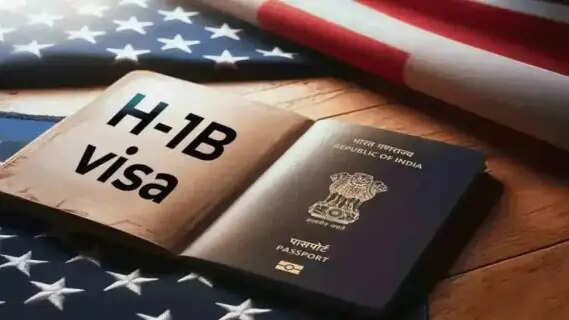
In a landmark legal ruling, Indian IT professionals and American tech companies have received massive news regarding H-1B visas. A US federal appeals court has delivered a major legal setback to President Donald Trump’s administration by refusing to lift a stay on an order that sought to impose a hefty $100,000 (approximately ₹95 lakh) fee on new H-1B visa applications.A three-judge bench of the Boston-based First Circuit Court of Appeals upheld a lower court's judgment that declared the astronomical fee completely unlawful. This decision comes as a monumental victory for global skilled workers, especially from India, and US tech giants reliant on foreign talent.Why the Federal Court Struck Down the $100,000 FeeUS District Judge Leo T. Sorokin had previously ruled on June 8, 2026, that levying such an exorbitant fee amounted to an "illegal tax". The court emphasized that the US Congress never granted authority to the President or the executive branch to unilaterally enact such financial burdens.The legal challenge was spearheaded by Attorneys General from 20 Democratic-led states who argued that the executive overstepped constitutional limits by using a presidential proclamation instead of passing legislation through Parliament. Citing a historic 1989 US Supreme Court precedent, the appeals court reiterated that imposing major tax or fee structures on citizens or businesses strictly mandates explicit congressional authorization.Trump Administration's Rationale Behind the FeePresident Donald Trump had announced the $100,000 fee via a presidential proclamation in September 2025. The administration justified the massive price tag by claiming American corporations abuse the H-1B program to import foreign workers at lower wage brackets, thereby undercutting jobs for US citizens. The excessive fee was intended to heavily disincentivize US companies from sponsoring overseas staff.Why Indian IT Workers and US Tech Giants are CelebratingThe H-1B non-immigrant visa is a crucial bridge that allows American employers to hire skilled foreign talent in specialized technical fields like Information Technology, engineering, and artificial intelligence. Out of the annual quota of 85,000 H-1B visas—comprising 65,000 for regular applicants and 20,000 for US master's degree graduates—Indian and Chinese techies secure a overwhelming majority.Prior to the proposed rule, US companies paid between $2,000 and $5,000 (roughly ₹1.6 lakh to ₹4.1 lakh) in official filing fees to sponsor an H-1B candidate. Jumping to $100,000 would have rendered global talent recruitment financially unviable for all but the wealthiest corporations.What Happens Next for H-1B Applicants?With the First Circuit Court of Appeals rejecting the administration's stay request, the $100,000 fee cannot be enforced while the full appeal plays out in court. This means that US Citizenship and Immigration Services (USCIS) will continue accepting and processing H-1B visa petitions under the standard, pre-existing fee structure for the immediate future.
Around the web