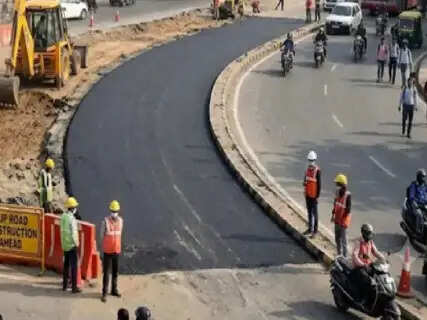
Gurugram's busiest and most critical transit hub, Rajiv Chowk on the Delhi-Jaipur Highway, is gearing up for a massive infrastructural transformation aimed at easing chronic traffic congestion. In a joint decision finalized by the National Highways Authority of India (NHAI), the Gurugram Metropolitan Development Authority (GMDA), and the local district administration, authorities have decided to permanently close four underground pedestrian crossings that were built nearly a decade ago at a cost of crores of rupees. In their place, dedicated slip roads will be developed to streamline vehicular movement, reduce bottleneck pressures at the main junction, and provide seamless connectivity for thousands of commuters traveling across the National Capital Region (NCR).Why Authorities Decided to Shut Down the Decade-Old UnderpassesConstructed approximately ten years ago, the four underground pedestrian crossings at Rajiv Chowk were originally designed to allow foot commuters to cross the bustling highway safely without disrupting high-speed vehicular traffic. However, over the years, public utility of these subways steadily declined due to a lack of proper maintenance, poor lighting, and accessibility challenges. Eventually, the underpasses grew largely deserted, transforming into hotspots for antisocial elements and raising severe safety concerns for citizens. Recognizing that these multi-crore public assets were failing to serve their intended purpose while vehicular traffic exploded along the Delhi-Jaipur corridor, authorities concluded that repurposing the space for traffic management was the most pragmatic engineering solution.Slip Roads Expected to Ease Peak-Hour Chaos and Reduce QueuesRajiv Chowk serves as a major intersection handling heavy transit between the Delhi-Jaipur Highway and various arterial urban routes within Gurugram, including traffic moving toward Sohna. During morning and evening peak hours, the intersection routinely witnesses massive traffic snarls and long vehicle queues that spill over into surrounding sectors. According to NHAI Project Director Yogesh Tilak, the low footfall in the pedestrian subways prompted the decision to discontinue their use and construct efficient slip roads instead. Once the pedestrian crossings are formally sealed over the next month and a half, physical construction for the slip roads will commence, significantly shortening wait times at signals and eliminating unnecessary halts at the main junction.Experts Weigh In on Past Planning Shortfalls and Long-Term SolutionsUrban infrastructure experts have noted that the initial planning of Rajiv Chowk lacked foresight regarding exponential vehicular growth. J.S. Suhag, former technical advisor to the NHAI, pointed out that if a comprehensive cloverleaf flyover design had been implemented initially for the Delhi-Jaipur Highway intersection, vehicles coming from intersecting directions would not conflict at a single grade-separated junction. Nevertheless, local commuters, daily office-goers, and transport unions have welcomed the upcoming modifications, hoping that the new slip roads will finally bring permanent relief from the daily gridlocks plaguing one of Gurugram's most vital traffic arteries.
Around the web