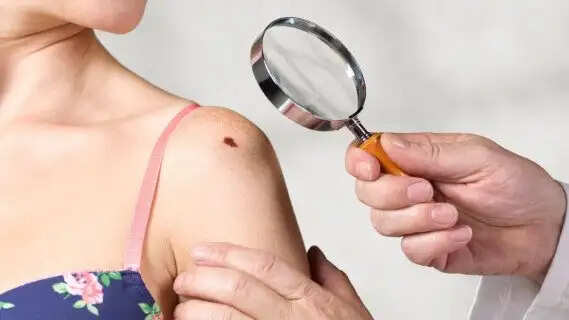
Most of us have at least a few moles on our bodies. Often, we consider them "beauty spots" and think nothing of them. While the vast majority of moles are harmless, they can occasionally be a silent indicator of something more serious: skin cancer.Dr. Soumya Sachdeva, a leading dermatologist at Max Hospital, Ghaziabad, emphasizes that early detection is key. By using the simple ABCD Rule, you can monitor your skin from the comfort of your home and know exactly when it’s time to call a professional.Decoding the ABCD RuleMonitoring your moles doesn't require complex tools—just a keen eye. Follow these four criteria to assess your skin health:1. A for Asymmetry (Abnormal Shape)A healthy, normal mole is usually symmetrical. If you were to draw a line through the middle, both halves would match. If your mole looks abnormal, with one half looking significantly different from the other in shape or size, it could be a warning sign.2. B for BorderTake a close look at the edges. Normal moles have clean, well-defined borders. If the edges of your mole look blurred, ragged, notched, or seem to be spreading irregularly into the surrounding skin, it needs a medical evaluation.3. C for ColorConsistency is a good sign. Most harmless moles are a single shade of brown. If you notice a single mole having multiple colors—such as shades of red, white, blue, or varying degrees of black and brown—this lack of uniformity is not normal.4. D for DiameterSize matters. Generally, a mole that is less than 6 millimeters (about the size of a pencil eraser) is considered safe. However, if a mole starts to enlarge or grows rapidly in a short period, it should not be taken lightly.Red Flags: When to See a Doctor ImmediatelyBeyond the ABCD rule, certain physical changes in the area around a mole are considered "red flags":Bleeding: If a mole starts to bleed without any injury.Pain or Itching: Persistent pain, tenderness, or itching around the mole.Pus: Any discharge or pus formation.Texture Changes: If a flat mole suddenly becomes raised or develops a crusty surface.Who is at Higher Risk?While anyone can develop skin issues, certain factors make you more vulnerable:Fair Skin: People with light skin that burns easily in the sun.Sun Exposure: Those who spend a significant amount of time outdoors without protection.Family History: A genetic history of melanoma or other skin cancers.High Mole Count: Having a large number of moles (more than 50) across the body.The Bottom LineChecking your skin once a month only takes a few minutes but can be life-saving. If you notice a mole that is "evolving"—changing in any way—don't wait for it to become painful. A quick consultation with a dermatologist can provide peace of mind or an early start to necessary treatment.
Around the web