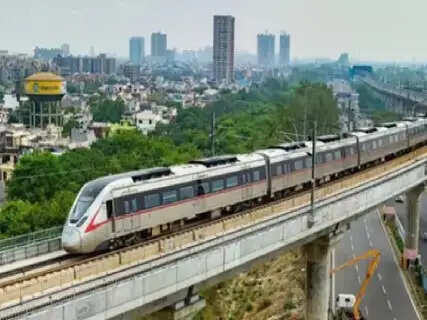
The much-anticipated Namo Bharat Regional Rapid Transit System (RRTS) project is poised for a major expansion. Union Minister of State Rao Inderjit Singh has officially written a formal letter to the Union Finance Department, urging them to expedite financial approvals to extend the high-speed rail corridor all the way up to Behror in Rajasthan during the first phase of construction itself. This crucial push aims to fulfill long-standing public demands from residents and social organizations across the region.Restoring the Original Plan: From Bawal to BehrorHighlighting the project's background, Rao Inderjit Singh pointed out that the Union Ministry of Urban Development and Housing had originally approved the Namo Bharat corridor stretching from Sarai Kalekhan through Gurugram and Bawal all the way to Neemrana and Behror years ago. However, subsequent revisions restricted the operational scope to Dharuhera and Bawal. Responding to persistent appeals from the public and local organizations in Rajasthan, the formal proposal file for the Behror extension was advanced for financial clearance in July 2026.Four New Stations and a Blazing 24-Minute JourneyUnder the proposed extension plan, the Namo Bharat corridor will stretch onward from Bawal to Behror, covering approximately 11 kilometers within Haryana and 25 kilometers inside Rajasthan. Commuters will be able to complete this entire stretch in a mere 24 minutes. To facilitate seamless connectivity, four brand-new stations will be strategically constructed between Bawal and Behror, significantly boosting regional transit, commercial mobility, and economic integration across the National Capital Region and neighboring Rajasthan.Financial Implications and Project Cost IncreaseExpanding the high-speed rail network further into Rajasthan will involve substantial infrastructure development. According to official estimates shared by the Union Minister, extending the Namo Bharat line from Bawal to Behror will increase the overall project cost by approximately 8,000 crore rupees. Despite the financial augmentation, the initiative is expected to transform daily commuting, ease highway congestion, and accelerate regional development for thousands of travelers moving between Delhi, Haryana, and Rajasthan.
Around the web