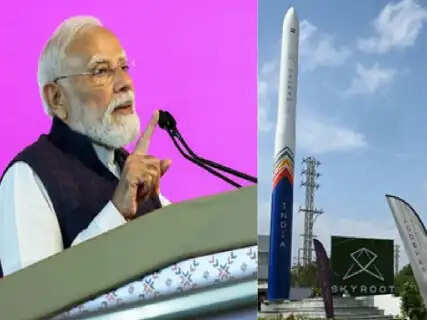
In a historic development that signals a massive structural transformation for the global space economy, India is all set to witness the launch of its first privately developed orbital launch vehicle, Vikram-1. Spearheaded by Hyderabad-based space tech pioneer Skyroot Aerospace under the landmark "Mission Aagaman," the high-stakes launch from the Satish Dhawan Space Centre marks the first instance of a domestic private entity utilizing its own proprietary vehicle to place payloads into Low Earth Orbit (LEO). Prime Minister Narendra Modi highly lauded the initiative, calling it a glorious milestone that showcases the rapid acceleration and technical capability of the country’s private space sector.PM Narendra Modi Applauds Space Sector Reforms And Invites Youth To Witness HistoryExpressing his immense enthusiasm on the social media platform X just ahead of the scheduled liftoff, Prime Minister Modi emphasized that this mission perfectly reflects the successful execution of recent policy reforms within India's space ecosystem. He highlighted that the advanced four-stage rocket is specifically engineered to provide rapid, tailored, and cost-effective satellite launch services for global clients. Extending his best wishes to the engineering teams, the Prime Minister urged citizens, especially young students and technology innovators, to watch the historic event live and actively showcase their support for domestic aerospace startups using the centralized digital campaign.Former ISRO Chief S. Somanathan Commends The Rise Of India's Private Rocket Building CapabilitiesAdding significant weight to the milestone, former Indian Space Research Organisation (ISRO) Chairman S. Somanathan extended his congratulations to the startup, describing the test flight of Mission Aagaman as a structural evolution for the nation. He noted that the flight represents much more than a routine orbital test, serving as definitive proof of India's independent private rocket-building capabilities. Somanathan added that the foundational support laid down by ISRO, combined with visionary policy reforms, has opened up immense commercial avenues for local enterprises, giving the country's youth the confidence to drive innovation and claim a dominant share of the global commercial satellite market.The Engineering Behind Vikram-1: A Deep Dive Into Skyroot’s Lightweight Carbon Composite MarvelAccording to technical specifications released by Skyroot Aerospace, Vikram-1 stands as a highly sophisticated 24-meter-tall, four-stage orbital launch vehicle built using advanced, lightweight carbon-composite structures to maximize structural efficiency. The propulsion system is meticulously engineered with three highly efficient solid-fuel stages complemented by a precise liquid-fueled orbital adjustment module at the top. This configuration allows the vehicle to seamlessly carry payloads weighing up to 350 kilograms into a 450-kilometer Low Earth Orbit, offering customized ride-share and dedicated launch options for international satellite operators.
Around the web