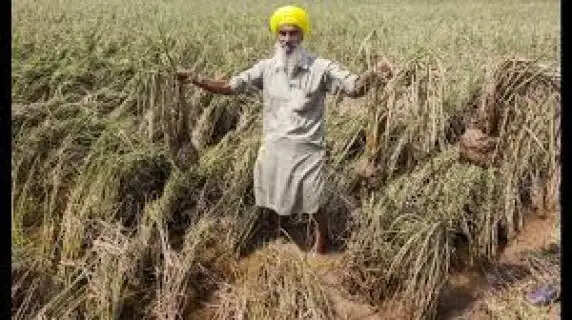
Heavy rains and devastating hailstorms have sent shockwaves through Punjab's farming community, destroying standing crops across more than 1.30 lakh acres. The sudden change in weather has left farmers in deep distress as the wheat harvest, which was just around the corner, now faces a massive yield loss.Crops Worth Crores Flattened in Seven DistrictsThe inclement weather has hit the Malwa belt the hardest. According to preliminary reports, districts like Fazilka, Sri Muktsar Sahib, and Bathinda have witnessed the maximum destruction. Agriculture Minister Gurmeet Singh Khudian confirmed that Fazilka reported damage over 45,000 acres, followed by 43,000 acres in Muktsar and 20,000 acres in Bathinda.Punjab Govt Mobilizes 500+ Officials for 'Special Girdawari'To ensure every affected farmer gets a fair evaluation, the Punjab government has deployed over 500 agriculture department officials. Chief Minister Bhagwant Mann has ordered a 'Special Girdawari' (crop loss assessment) to be completed on a war footing. These teams, including 145 Group-A officers, are working in close coordination with the Revenue Department across seven critical districts: Amritsar, Mansa, Ferozepur, Moga, and the ones mentioned above.Appeal for Central Aid and Immediate ReliefWith wheat sown over 35 lakh hectares this season, the state was expecting a bumper yield. However, the relentless rain has not only flattened the crops but also increased the moisture content in the grains, which could delay procurement. Minister Khudian has written to Union Agriculture Minister Shivraj Singh Chouhan, urging the Centre to dispatch a high-level team for a detailed assessment and provide immediate financial relief to the farmers.Farmers Seek Compensation for Huge LossesLocal farmers have expressed concerns over a potential yield loss of 4-5 quintals per acre. The Samyukta Kisan Morcha (SKM) and other farming bodies have also demanded swift compensation, stating that the "one size fits all" policy needs to be revised to reflect actual ground-level losses caused by climate change.
Around the web