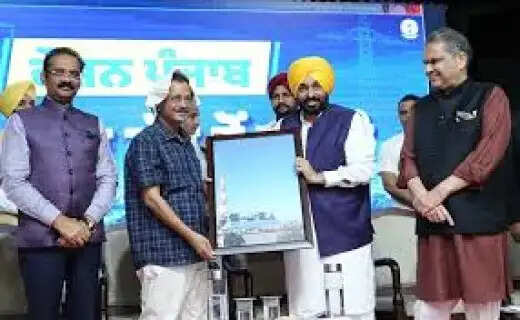
In a significant move to transform the rural landscape, the Punjab Government has announced the launch of the ambitious 'Mukhya Mantri Roshan Punjab Yojna'. Under this massive initiative, over 3 lakh solar LED streetlights will be installed across 13,000 villages, ensuring that every corner of rural Punjab stays illuminated with clean, green energy.The announcement was made by the New and Renewable Energy Minister, Aman Arora, following the state cabinet's approval led by Chief Minister Bhagwant Mann. With an estimated outlay of ₹550 crore, this project is being hailed as one of the largest rural lighting drives in the state's history.Zero Electricity Bills and Smart MonitoringThe transition to solar energy is a strategic move to eliminate electricity costs for Gram Panchayats. Minister Aman Arora emphasized that these solar lights are not only cost-effective but also highly reliable for remote areas. To ensure long-term functionality, the government has introduced a 7-year annual maintenance contract.A high-tech monitoring system will be the backbone of this scheme. Each streetlight will be geo-tagged, and the entire network will be managed through a centralized command and control center. Residents can report any malfunctions via an IVR helpline, with a guarantee that repairs or replacements will be completed within just three days.Focus on Women’s Safety and Village SecurityBeyond mere illumination, the 'Roshan Punjab' scheme aims to enhance the safety and security of rural residents. "The primary goal is to provide a safer environment, particularly for women and children, while boosting economic activities in the villages after sunset," said the Minister. The project will prioritize public spaces and residential areas belonging to Scheduled Castes to ensure inclusive development.Phased Rollout and Funding StructureThe project will be executed by the Punjab Energy Development Agency (PEDA). The installation process is scheduled to take place in a phased manner between June and October 2026.Regarding the financial structure, the state government will bear 70% of the project cost, while the remaining 30% will be contributed by the respective Gram Panchayats. This partnership model is designed to empower local bodies while modernizing village infrastructure.
Around the web