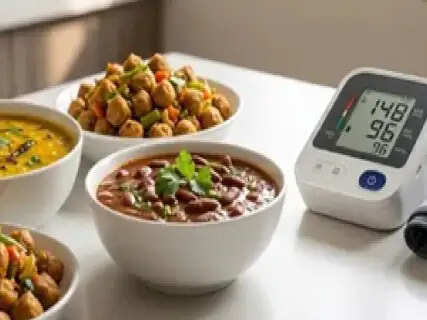
Making simple adjustments to your daily plate might be the ultimate natural defense against the silent killer of cardiovascular health. If you frequently enjoy traditional home-cooked meals featuring lentils, kidney beans (Rajma), green peas, or modern plant alternatives like tofu, recent clinical data brings exceptionally good news for your long-term wellness. A comprehensive medical analysis published in the prestigious journal BMJ Nutrition, Prevention & Health has established a direct, powerful correlation between the regular consumption of legumes and soy products and a significantly reduced vulnerability to developing chronic hypertension.The Global Crisis: Understanding The Dangerous Threshold Of High Blood PressureIn clinical diagnostics, a patient is formally diagnosed with hypertension when their systemic blood pressure consistently registers at or above the threshold of 130/80 mm Hg. The alarming magnitude of this lifestyle condition is reflected in global health statistics, which indicate that nearly 50 percent of the entire adult population in nations like the United States silently suffers from it. While historical pharmaceutical trials have widely proven that consuming plant-based proteins minimizes the broader risk of strokes and coronary artery blockages, researchers launched this multi-center analysis to evaluate whether these specific kitchen staples exert a direct, standalone regulative influence on structural blood pressure stability.Deep Dive Into The Data: Comprehensive Analysis Involving 12 Global Scientific StudiesTo arrive at an undeniable, data-driven conclusion, a dedicated team of international scientists meticulously pooled and audited raw medical statistics extracted from 12 independent health cohorts. This massive meta-analysis tracked the lifestyle patterns, metabolic baselines, and daily dietary records of tens of thousands of diverse global participants, carefully monitoring both healthy individuals and diagnosed hypertensive patients over an extended timeline. When the comprehensive nutritional ledgers were cross-referenced with cardiovascular performance, the final reports indicated an undeniable protective shield generated by specific natural foods.The Exact Daily Portions: Recommended Quantities For Maximum Cardiovascular ReliefThe published research successfully identified a precise dose-response relationship, meaning that increasing your consumption of these wholesome ingredients—within a balanced caloric limit—directly scales up your body's defense mechanism against high BP:The Legume Threshold: Individuals who integrated approximately 170 grams (roughly equivalent to 1.7 cups) of cooked legumes into their daily meals experienced a substantial 16% drop in their high blood pressure risk compared to those who consumed only nominal or negligible amounts.The Soy Supercharge: The preventive metrics surged even higher when analyzing pure soy derivatives. Participants who consumed a modest 60 to 80 grams of premium soy products daily registered a stunning 19% reduction in their overall risk of developing chronic hypertension.Practical Dietary Mapping: Easy Ways To Upgrade Your Daily Nutrition PlanTransitioning toward a blood-pressure-friendly lifestyle does not require restrictive or monotonous eating patterns. Nutritionists recommend focusing on two versatile, nutrient-dense food groups to naturally fortify your daily meals:Diversified Legumes: Rotate your weekly menus to feature high-fiber green peas, broad beans, fiber-rich chickpeas (Chana), and a colorful array of traditional split-lentils (Dals), which act as natural vascular scrubbers.Versatile Soy Alternatives: Expand your palate beyond standard bean curd or tofu by experimenting with modern, gut-friendly options such as nutrient-rich soy milk, fermented tempeh, and traditional umami-packed miso paste to maximize your daily plant-protein intake.
Around the web