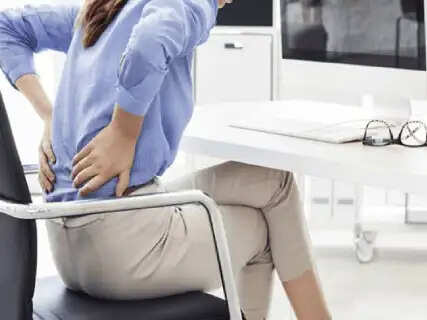
In an era dominated by prolonged office hours, remote laptop workstations, and continuous smartphone usage, sedentary lifestyles have triggered a massive surge in chronic musculoskeletal issues. Remaining anchored to an office chair for extended periods severely reduces spinal mobility, leading to widespread complaints of lower back stiffness, acute pain, and structurally compromised posture. Health experts warn that if these early indicators are left unaddressed, chronic physical inactivity can escalate into debilitating medical conditions, including cervical spondylosis, slipped discs, severe nerve compression, and chronic muscle degeneration. Fortunately, integrating targeted mobility drills into your daily routine can dramatically restore flexibility, enhance localized blood circulation, and keep your body thoroughly active and resilient.Revitalizing The Spine: Dynamic Movements to Restore FlexibilityTo counteract structural compression caused by hours of sitting, simple target-specific dynamic movements can quickly re-educate your muscles and spinal column:The Cat-Cow Stretch: Operating as a foundational movement for spinal realignment, this exercise requires you to drop to your hands and knees on a level surface. Inhale deeply while arching your lower back downward and lifting your gaze upward, then exhale smoothly while rounding your spine toward the ceiling and tucking your chin firmly into your chest. This simple, rhythmic sequence decompresses compressed vertebrae, lubricates joint tissue, and gently releases built-up neural tension.The Seated Spinal Twist: Exceptionally practical for mid-day desk relief, this rotational stretch targets the deep tissues of the torso. While keeping your spine strictly vertical, cross one leg over the other and slowly rotate your upper body toward the elevated knee. This twist drastically releases deep-seated rotational tightness throughout the hips, mid-back, and lumbar region.Strengthening The Core: Correcting Posture and Activating Dormant GlutesAlleviating pain requires a balance of targeted stretching and active muscular engagement to rebuild underlying support systems:The Glute Bridge: Prolonged sitting forces the gluteal muscles into an inactive state, overloading the lower back. To reverse this, lie flat on your back with your knees bent and feet resting firmly on the floor. Engage your core and drive through your heels to elevate your hips toward the ceiling, holding the peak contraction for several seconds. This activation structurally reinforces lower back muscles and naturally corrects rounding shoulders.The Pelvic Tilt: This subtle yet highly effective rehabilitative drill focuses entirely on enhancing deep abdominal stability and lumbar control. Lying on your back with knees bent, consciously contract your core muscles to flatten your lower back completely against the floor, closing any physical gap. Holding this position for a few seconds trains your pelvic floor and stabilizes your core foundation.Instant Decompression: Restorative Stretches For Immediate ReliefWhen acute tightness sets in, restorative recovery movements can provide immediate relief by gently elongating strained muscle fibers:The Knee-to-Chest Stretch: For rapid, on-demand relief from lower back pressure, lie flat on a comfortable mat. Bring both knees smoothly up toward your upper torso, locking your hands firmly around your shins to hold them close. This position instantly stretches and decompresses the hard-working lumbar muscles, offering immediate relief from localized pressure.The Child’s Pose (Balasana): A deeply restorative posture that simultaneously soothes both muscular tension and mental stress. Kneel on the floor, sit back comfortably on your heels, and extend your arms completely forward along the ground while resting your forehead peacefully on the mat. The passive elongation delivers a profound, therapeutic stretch across your lower back, latissimus dorsi, and shoulders, helping you build a pain-free body despite a busy desk-bound career.
Around the web