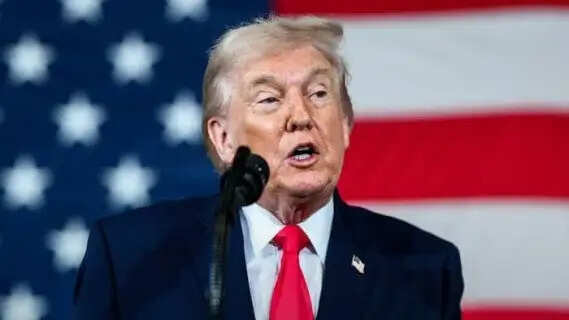
US President Donald Trump has once again captured the global spotlight with his characteristic brand of high-stakes foreign policy rhetoric. In an extensive interview with CNBC’s Joe Kernen in the Oval Office, Trump boasted about the geopolitical efficacy of import duties, asserting that his aggressive trade strategies allowed him to halt multiple global conflicts during his presidency single-handedly. The most striking revelation came as Trump revived his bold claim that he personally de-escalated a dangerous, full-scale military standoff between nuclear-armed neighbours India and Pakistan by threatening both nations with devastating economic sanctions.The 200% Ultimatum: Trump's Account of Stopping a Nuclear ConfrontationDetailing the height of the hostilities between the two South Asian powers, Trump explained how he used trade leverage as an ultimate diplomatic weapon. He claimed that the two nations were on the absolute brink of a catastrophic, wider confrontation, describing a highly volatile situation where 11 aircraft had allegedly been shot down.According to Trump, he issued a direct, uniform economic ultimatum to both New Delhi and Islamabad to force an immediate halt to the military escalation. He stated that he warned both leaderships that if they continued fighting, he would immediately impose a massive 200 per cent tariff on all goods originating from their countries. Trump asserted that this financial intimidation was the primary catalyst for peace, claiming that five out of the eight wars he has supposedly stopped during his tenure were resolved specifically through the strategic leverage of import tariffs.Millions of Lives Saved? The Alleged Praise from IslamabadAmplifying his rhetoric, the US President further claimed that his intervention received direct, historical validation from the highest levels of the Pakistani government. Trump told CNBC that Pakistan Prime Minister Shehbaz Sharif had personally lauded the White House's swift, aggressive posture.According to Trump’s account, the Pakistani Prime Minister directly credited the US administration's tariff ultimatum with preserving regional stability, stating that President Trump saved at least 30 million lives by successfully preventing the conflict from spiralling out of control. These sweeping statements come at a time when Trump is facing significant domestic pushback over his broader economic mandates, notably following a US Supreme Court ruling that his administration had exceeded its statutory authority under the International Emergency Economic Powers Act (IEEPA) of 1977 to impose broad-based import tariffs.New Delhi's Firm Rebuttal: The Reality of Operation Sindoor and Bilateral TruthsDespite Trump's persistent claims of American mediation, New Delhi has consistently and firmly refuted any assertions of third-party intervention. The Ministry of External Affairs has repeatedly reiterated India's long-standing diplomatic position: all outstanding issues with Pakistan are strictly bilateral, with absolutely no room for external arbitration or foreign management.Indian officials maintain that the actual cessation of hostilities was achieved strictly through direct, institutional channels between the respective Directors General of Military Operations (DGMOs) of the two militaries. The geopolitical backdrop of the confrontation traces back to the tragic Pahalgam terror attack, where Pakistan-backed militants targeted innocent civilians. In a decisive and professional response, India had launched Operation Sindoor—a highly calibrated, precision tri-services campaign designed to dismantle cross-border terrorist infrastructure along the Line of Control. Indian strategic experts emphasise that it was this resolute, targeted military posture, combined with structured bilateral military communication, that successfully stabilised the border, independent of Washington's tariff warnings.
Around the web