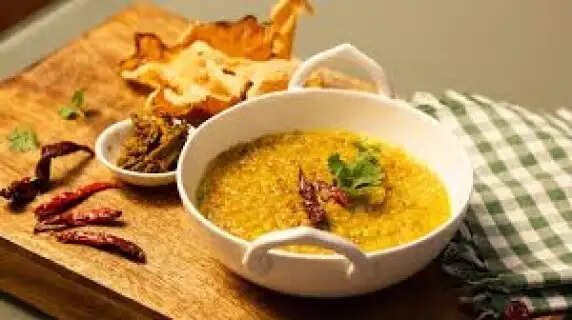
There’s a reason why, in almost every Indian household, the go-to meal for anything from a mild fever to a heavy stomach is a simple bowl of Khichdi. It’s light, warm, and comforting. But beyond being a "sick person’s meal," Khichdi is a nutritional powerhouse that has earned its title as a "healing food."Let’s look at why this humble mix of rice and lentils is so effective, and why balance is key.Why It’s Called a ‘Healing Food’The Gentle Digestor: Khichdi is incredibly easy on the stomach. Because it’s soft and usually cooked with minimal spices and oil, it doesn't force your digestive system to work overtime. This makes it the perfect choice for anyone recovering from illness or dealing with a weak gut.The Complete Protein: When you combine rice (a carbohydrate) with dal (a lentil), you get a complete amino acid profile. This provides your body with the protein it needs to repair tissues and the energy it needs to function, even when you aren't feeling 100%.Gut Health Hero: If you’re struggling with acidity, gas, or bloating, a few meals of Khichdi can act as a "reset button" for your gut. It’s naturally soothing and helps in balancing the digestive fire.Natural Detox: Many people use Khichdi as part of a detox diet. It feels light on the body and helps in flushing out toxins without leaving you feeling starved.The Other Side: Can You Have Too Much?While it’s a wonder food, relying only on Khichdi can have some downsides:Nutritional Gaps: If you eat nothing but plain Khichdi, you might miss out on essential fats and various vitamins found in other food groups.The Carbohydrate Factor: Since the base is rice, it is high in carbs. If you have diabetes, it’s important to monitor portions and perhaps use brown rice or millets instead.The ‘Boredom’ Bar: Let’s be honest—plain Khichdi every day can get monotonous, which might lead to a lack of interest in eating altogether.How to Make Your Khichdi Even HealthierYou don’t have to stick to the bland version! You can level up your bowl by:Adding Veggies: Toss in some carrots, peas, spinach, or beans to add fiber and vitamins.The Ghee Factor: A small dollop of desi ghee not only makes it delicious but also adds healthy fats that aid in nutrient absorption.Switching Grains: Try making it with oats, daliya (broken wheat), or millets for a different nutritional profile.When Should You Reach for a Bowl?During a fever or when feeling physically weak.After a long period of overeating (like post-wedding season!).When your stomach feels "off" or acidic.On those busy nights when you want something healthy but quick.At the end of the day, Khichdi is a testament to the fact that the most effective healing often comes from the simplest of things. It’s not just a meal; it’s a warm hug for your digestive system.
Around the web