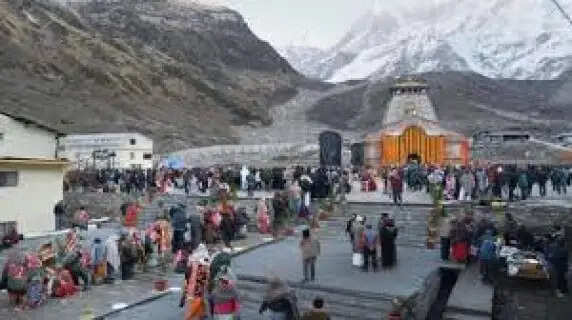
The doors of the holy Kedarnath Dham have opened, drawing thousands of devotees to the majestic Himalayas. Amidst the chanting of mantras and the ringing of temple bells, a centuries-old tradition remains steadfast: the Chief Priest (Rawal) of Kedarnath must belong to the Veerashaiva Lingayat community of Karnataka.This unique cultural bridge between North and South India is not just a coincidence but a deeply rooted spiritual mandate that has survived for over a thousand years.The Legacy of Adi ShankaracharyaThe origin of this tradition dates back to the 8th century, established by the great philosopher and saint Adi Shankaracharya. When he revived the Kedarnath temple, he sought to unify the diverse spiritual landscape of India.To create a symbol of national integration, he decreed that the priests of North Indian shrines should hail from the South, and vice versa. Specifically for Kedarnath, he entrusted the responsibility to the Vairagi Jangam ascetics from the Lingayat community of Karnataka.Who is the 'Rawal' of Kedarnath?The Chief Priest of Kedarnath is known as the Rawal. According to the rules:The Rawal does not perform the daily puja (rituals) himself; instead, he appoints subordinates to do so.The Rawal must belong to the Veerashaiva Lingayat sect.He must follow a life of strict celibacy and devotion.Even today, the current Rawal, Shri 1008 Bhimashankar Ling Shivacharya, continues this ancient lineage.The Connection Between Karnataka and UttarakhandThe Lingayat community follows the teachings of Lord Basavanna and are ardent devotees of Lord Shiva. The selection of priests from this community ensures that the rituals are performed according to the Shiva Siddhanta and the specific Vedic traditions prescribed by Shankaracharya.This bond is so strong that the Rawal’s traditional seat is not at the shrine during the winters, but at Ukhimath, where the deity is moved when the temple is covered in snow. Even there, the South Indian traditions of worship remain unbroken.Strict Rules of PriesthoodThe right to serve the deity is governed by the Kedar-Badri Temple Committee. While the Rawal comes from Karnataka, the local Teerth Purohits (pilgrimage priests) of the region handle the logistical and administrative guidance for pilgrims. However, the core spiritual authority regarding the sanctum sanctorum remains exclusively with the Lingayat Rawal, ensuring that the sanctity of the "Dakshin to Uttar" (South to North) connection is never compromised.
Around the web