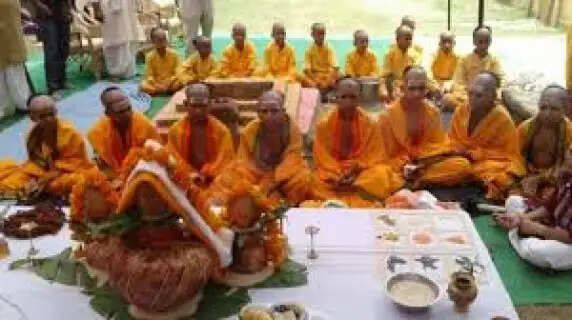
The passing of a loved one is followed by various rituals in Indian culture, one of the most prominent being the Mundan or the shaving of the head. While many view this as a traditional custom, the ancient Garuda Purana provides profound spiritual and psychological reasons for this practice. In the realm of Vedic traditions, every ritual serves a dual purpose: honoring the departed soul and protecting the living.Breaking the Bond of Ego and AttachmentAccording to the Garuda Purana, hair is often associated with beauty, vanity, and the human ego. When a person participates in funeral rites, shaving the head symbolizes a total surrender to the divine and a detachment from worldly vanity. It is a physical manifestation of grief and a way to show that the individual is mourning the loss of a significant relationship. By removing their hair, the mourner acknowledges the transition of life and death, letting go of the "pride" that hair often represents in social settings.Spiritual Protection and Energy CleansingFrom a spiritual perspective, the act of shaving the head is believed to create a "shield" for the person performing the last rites (the Karta). It is said that during and after a funeral, the atmosphere is heavy with mourning and certain energies. Shaving the head is thought to cleanse the individual's aura and prevent negative energies from clinging to them. The Garuda Purana suggests that this ritual helps the living maintain a sense of purity and mental peace during a highly emotional and spiritually sensitive time.The Scientific and Hygienic PerspectiveBeyond the spiritual verses, there is a practical and hygienic aspect to this ritual. Funerals involve being in close proximity to a decomposing body and the smoke from the funeral pyre. Hair is porous and can easily trap bacteria, odors, and micro-particles from the environment. In ancient times, when modern sanitation was not available, shaving the head served as a thorough cleansing process to ensure that the mourners did not carry any infections or impurities back into their homes and communities.A Symbol of a New BeginningFinally, the regrowth of hair after the mourning period symbolizes the cycle of life. Just as the old hair is removed to make way for the new, the ritual reminds the family that while the loss is permanent, life must continue. It marks the end of the intense period of "Sutak" (impurity/mourning) and the gradual return to a normal social life, carrying the memories of the departed without being weighed down by the heaviness of the immediate grief.
Around the web