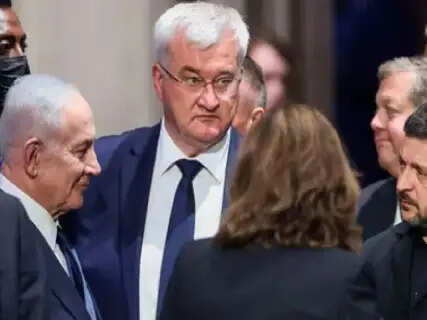
A high-stakes diplomatic encounter between Ukrainian President Volodymyr Zelensky and Israeli Prime Minister Benjamin Netanyahu in Washington has sent shockwaves through international intelligence circles, drawing urgent parallels to the geopolitical volatility of 1914. While the ongoing Russia-Ukraine conflict in Eastern Europe and the Middle Eastern flare-ups have largely been viewed as separate theaters of war, this recent summit has triggered intense speculation over a potential strategic axis uniting Ukraine, Israel, and the United States against Moscow and Tehran. As geopolitical lines blur across continents, global analysts are closely monitoring how this convergence could reshape modern warfare and diplomacy.The Washington Summit and Intertwined Global CrisesUkrainian President Volodymyr Zelensky and Israeli Prime Minister Benjamin Netanyahu arrived in Washington simultaneously to attend the state funeral of late U.S. Senator Lindsey Graham—a prominent political figure known for staunchly advocating a muscular U.S. foreign policy against Iran while fully backing military aid to Ukraine. Their subsequent closed-door meeting has effectively placed the White House at the intersection of two major global conflicts that are rapidly becoming deeply intertwined. Historians and diplomatic experts warn that the world is witnessing conditions reminiscent of the lead-up to World War I, where isolated regional crises risk merging into a wider global conflagration due to shifting military alliances, miscalculations, and compounding escalations.Maritime Clashes and the Russia-Iran Military NexusThe urgency of this emerging alliance is further underlined by escalating kinetic actions in strategic waterways. President Zelensky recently asserted that Ukrainian security forces successfully struck naval vessels in the Caspian Sea carrying critical military supplies and Iranian-manufactured drones destined for Russian forces. While Tehran vehemently rejected the claim—with Iranian Foreign Minister Abbas Araghchi accusing Kyiv of killing a sailor and warning of severe retaliation—Ukrainian Foreign Minister Andriy Tsibiha dismissed Iran's victimhood narrative. Kyiv contends that Tehran has actively fueled the European conflict since 2022 by supplying lethal Shahed drones and military technology that have devastated Ukrainian civilian infrastructure.Strategic Motives and Washington's Diplomatic Balancing ActWestern geopolitical analysts suggest that Kyiv is purposefully trying to link the European and West Asian battlefields in the eyes of Washington policy-makers. Experts like Trita Parsi from the Quincy Institute note that Ukraine aims to convince Western allies that supporting Kyiv is intrinsically tied to dismantling Iran’s aggressive regional military network. Meanwhile, U.S. President Donald Trump has adopted a measured diplomatic posture amidst allegations that Moscow provided satellite intelligence to help Iran target American military bases. Stating his intent to directly address the intelligence claims with Russian President Vladimir Putin, Trump's cautious response highlights an ongoing effort to maintain broader diplomatic equilibrium while navigating an increasingly volatile global landscape.
Around the web